Skip to content

collected invitations

the archive

  • blog
  • about

Best wishes for 2026!

Posted on 30 December 202530 December 2025
 
Welcome to the opening Saturday January 10, 4 – 7 PM
 
January 10 – February 14

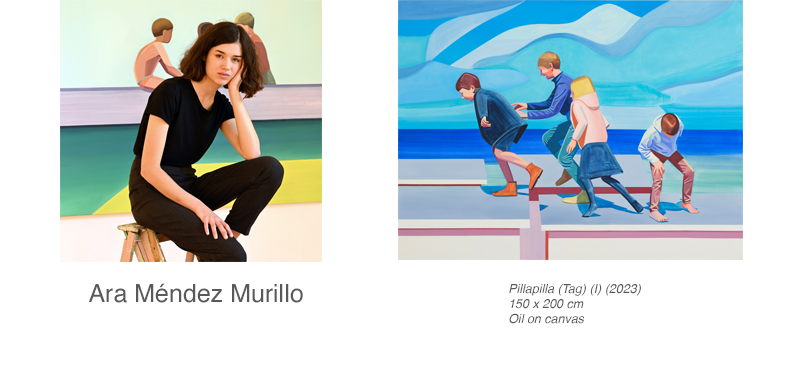
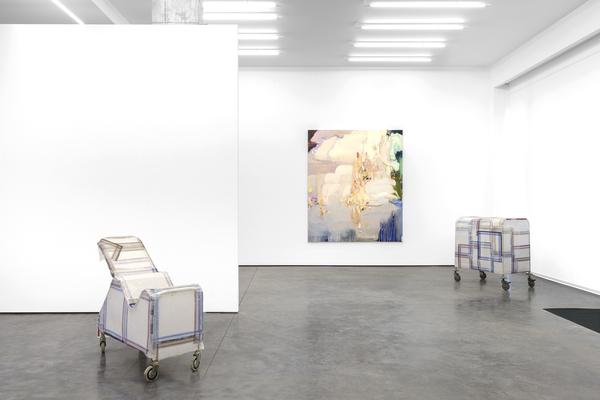
Anhelo / Yearning (2025) – 100 x 110 cm – oil on canvas
 

Ara Mendéz Murillo

_____________________________________________________________________________
 
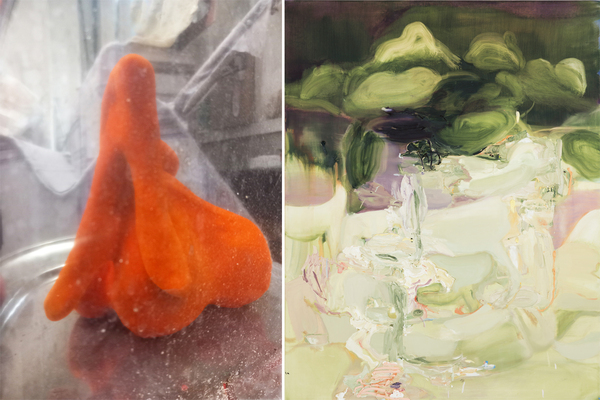
Pine tree (2025) – Ed. of 5 + 2AP – 23 x 21 x 4 cm – bronze
 
Mina Enowaki
_____________________________________________________________________________


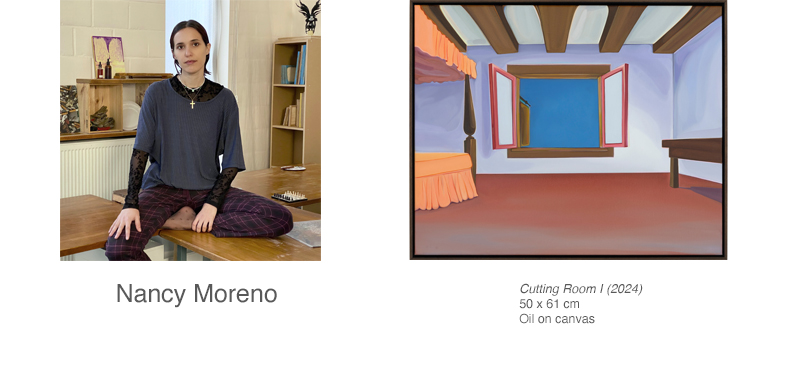
Wormhole (2025) – 18 x 16 cm – oil on wood (frame in cherry wood)
 
Nancy Moreno
_____________________________________________________________________________
 
Ara Méndez Murillo (°1997, Cordoba, ES, lives and works in Brussels) extracts meaning and symbolism from spontaneous sceneries she encounters, which she conveys in her paintings through bright colours, special light/shadow effects, smart compositions, and playfully assembled objects, figures and landscapes. While she was formally trained in painting during her bachelor in Fine Arts at the University of Seville (Spain), her artistic direction – both technically and narratively – crystallised during her years in Brussels. At La Cambre, her visual language expanded in scale and nuance. Represented by Whitehouse Gallery, Murillo showcased her works in previous exhibitions (‘A light’s narrative’, 2022; ‘The other team’, 2024) and art fairs. 
 
Mina Enowaki (°1998, Annnecy, FR, lives and works in Brussels) grew up between the mountains of the French Alps and spent her summers in Osaka (Japan) – a dual heritage that forms the foundation of her artistic practice. Her work draws from these contrasting environments: French landscapes and neighbourhoods on the one hand, Japanese folklore on the other. Photography, her first artistic love and the focus of her studies in Lausanne (Switzerland), remains the conceptual base of her artistic practice, which is multidisciplinary at heart. Since then, she has expanded her skills through classical painting training at La Cambre in Brussels and through residencies at Fondation Moonens and Fondation CAB, where sculpture, mixed media and textile became central to her evolving visual language. The bronze sculptures presented at Whitehouse Gallery are the culmination of this multidisciplinary trajectory.

 
Nancy Moreno’s (°1990, Montauban, FR, lives and works in Brussels) paintings captivate viewers through both technique and subject matter. She graduated from La Cambre in 2014, with a specialisation in drawing. Represented by Whitehouse Gallery – where she exhibited previous bodies of work in 2019 (‘Déréalisation’) and 2023 (‘Buzz’) – Moreno now continues to expand her distinctive visual language. Mixing resin with oil paints, she builds up her paintings through multiple translucent layers of paint. Each layer requires roughly two weeks to dry before another can be added, stretching the process over long periods of time. Echoing the optical logic of Old Masters like Jan van Eyck, this method produces an illusion of depth and perspective – giving the works their characteristic soft and slightly blurred appearance. She draws inspiration from lived experiences and from imagination and dream-like visions. She paints surreal and bizarre images that stem from a deep fascination for certain themes and concepts. The motif of the bunny, for instance, is drawn from Moreno’s symbolic language, personifying fear and symbolising unknown worlds on the one hand, and appearing cute and endearing on the other.

___________________________________________________________________________
           
 
Ch. de Charleroi, 54 1060 Brussels – 0032 473391478


Unsubscribe / Change Profile

Posted in newsletter collection

de Appel Periodical #1: Composting

Posted on 23 December 202523 December 2025
de Appel Periodical is een online publicatie van de Appel die twee keer per jaar verschijnt; samengesteld door het team van de Appel, samen met externe stemmen en bijdragen.
‌ ‌ ‌ ‌ ‌ ‌ ‌ ‌ ‌ ‌ ‌ ‌ ‌ ‌ ‌ ‌ ‌ ‌ ‌ ‌ ‌ ‌ ‌ ‌ ‌ ‌ ‌ ‌ ‌ ‌ ‌ ‌ ‌ ‌ ‌ ‌ ‌ ‌ ‌ ‌ ‌ ‌ ‌ ‌ ‌ ‌ ‌ ‌ ‌ ‌ ‌ ‌ ‌ ‌ ‌ ‌ ‌ ‌ ‌ ‌ ‌ ‌ ‌ ‌ ‌ ‌ ‌ ‌ ‌ ‌ ‌ ‌ ‌ ‌ ‌ ‌ ‌ ‌ ‌ ‌ ‌ ‌ ‌ ‌ ‌ ‌ ‌ ‌ ‌ ‌ ‌ ‌ ‌ ‌ ‌ ‌ ‌ ‌ ‌ ‌ ‌ ‌ ‌ ‌ ‌ ‌ ‌ ‌ ‌ ‌ ‌ ‌ ‌ ‌ ‌ ‌ ‌ ‌ ‌ ‌ ‌ ‌ ‌ ‌ ‌ ‌ ‌ ‌ 

Online versie
De Appel Periodical

de Appel Periodical is een online publicatie van de Appel die twee keer per jaar verschijnt; samengesteld door het team van de Appel, samen met externe stemmen en bijdragen. Het biedt ruimte voor reflectie en context rond ons programma en archief, in periodes tussen tentoonstellingen. Het brengt naar voren wat vaak minder zichtbaar is: gesprekken achter de schermen, archiefmateriaal, interviews, resultaten van workshops of bijeenkomsten, of een voetnoot die een eigen verhaal wordt. De Periodical is in het leven geroepen om even stil te staan bij aspecten van onze activiteiten die niet altijd aan bod komen in het publieke programma. Het is bedoeld voor iedereen die nieuwsgierig is naar wat er binnen en rond de Appel gebeurt: onze buren, partners, kunstenaars, onderzoekers en het publiek dat ons van een afstand volgt.

De Periodical wordt per e-mail verstuurd en is ook beschikbaar op onze website. De vorm varieert van een brief tot een verzameling fragmenten en bijdragen. In tegenstelling tot de nieuwsbrief, die zich richt op aankomende activiteiten, blikt de Periodical terug, naar binnen en opzij. Het deelt processen, reflecties en achtergrondverhalen. Elk nummer is losjes gestructureerd rond onze Glossary, een groeiende lijst van woorden en concepten die regelmatig terugkomen in ons werk.

Dit eerste Periodical, gepubliceerd na de afsluiting van Mercedes Azpilicueta’s solotentoonstelling CaccHho CucchhA en vóór de opening van het samenwerkingsproject The Broken Pitcher op 17 januari, bevat bijdragen van Sophie Soobramanien, Ilia Pellapaisiotou, Thomas Siderius en Santiago Pinyol. Het staat in het teken van het thema Compostering: het vitale, ondergrondse, levengevende proces van terugkeer en samensmelting dat de oogst van het volgende seizoen mogelijk maakt.

Veel leesplezier!


Harvesting
From: Maja Fowkes, The Green Bloc: Neo-avant-garde Art and Ecology under Socialism, de Appel Library


Archiving/Composting door Sophie Soobramanien

Een reflectie op de lezing en het gesprek van artistiek directeur Lara Khaldi en  kunstenaar Fransisca Khamis Giacoman over begraven voorwerpen in Palestina. Het evenement vond plaats op 28 februari 2025 als onderdeel van de tentoonstelling My Garden’s Boundaries are the Horizon door het collectief To See the Inability to See – kunstenaars Arefeh Riahi, Martín La Roche Contreras en Maartje Fliervoet. Dit stuk is geschreven door Sophie Soobramanien, kunstenaar, filmmaker en producent van de publieke programma’s van de Appel.

I was thinking about writing a text, something to contribute to this periodical. Something that draws from and expands on de Appel’s programme, to build our own discourse around the thematics that are important to us. We discuss having a glossary, highlighting and outlining key ideas. The word for this issue is compost. I find this out later. I’m happy, as I had already decided to write about a burial.

It is the 22nd of July 2025, and the de Appel team has a writing workshop with Taylor le Melle. How can we embed what we want to say in the format we want to write? Taylor brought three texts to help us think through form, tone, affordances and creative misuse. Extracts from Caroline Lavine’s Forms, Toni Cade Bambara’s Gorilla, My Love and As I Lay Dying by William Faulkner. We do an exercise where we write the content of one using the form of the other: the preface of Gorilla, My Love (personal, emotive, connected, high tempo) as a list by the character Cash in As I Lay Dying (detached, measured, pathological, precise). As another exercise, we collectively note as many writing ‘forms’ as we can think of:

Journal entries, texts, emails, reminders, inventories, birthday cards, footnotes, artist statements, apologies…

It grew into a very long list. (lists…)

Taylor asks us to think about the use and misuse of these forms, the way these containers for writing afford different potentialities. In Lavine’s Forms, a fork is a fork; it stabs and scoops, but through creative misuse, it can also be used to jimmy open a door. A stuck door. How could this premise help us with our writing? In the misuse of forms, what secrets can emerge?

On the 28th of February 2025, a group of people came together at de Appel and committed to a communal burial.¹ The attendees brought objects with them that held different personal significance.

The invitation for a burial was extended by Francisca Khamis² and de Appel, within the context of My Garden’s Boundaries Are the Horizon, an exhibition by Arefeh Riahi, Martín La Roche Contreras and Maartje Fliervoet. The exhibition and public programme were an expansion and unfolding of the artists’ publication project of the same name. Throughout the duration of the show, different aspects of the work were activated with the help of others. An essay by Lara Khaldi, artistic director of de Appel, on secret archives and fugitive objects in Palestine, had been cited in the publication and became the starting point for the event and collective conversation with Khamis.

The event began with a reading of an extract from the publication that spoke of the potential of all containers to hold secrets. It echoes the idea that more secrets will be generated in spaces where there is greater control, such as in archives and oppressive state regimes.

Lara’s essay talked about the citizen secrets buried all over the city of Ramallah. Political pamphlets, communiques for collective action, said to be buried in the alleys and back walls of buildings, having been thrown into deep holes and wet concrete during the first Intifada.
Where the distribution and disposal of such materials became a perilous process of avoiding capture by the Israeli state. The only way to remove the archive was to make an archive. On this, Francisca and Lara spoke about the significance of the underground and the burial in the Palestinian imaginary, which has weighed heavily since the Nakba. About how many things were buried during this event catastrophe of forcible exile — holding with them the promise of return to the land, the hope of the right person finding it, and, in the time between these moments, the resistance being kept alive.

The audience was invited to place their contributions on a table and, if desired, they could share the stories of their objects.

Now, I’m looking at my attempts of the writing exercises scrawled on the paper, considering if I’ll share them with the group. We’re discussing Cash’s list of reasons why he made his mother’s coffin on the bevel. Taylor asks what a misuse of a burial could be.

I start thinking about composting and burial as it connects to writing (and creative) practice. Both suggest that disappearance isn’t an ending, but a transformation.

Composting feels to be a hot topic in the cultural world as of late, especially as it intersects with digital technologies. My friend Shreya keeps sending me Instagram posts for open calls about compost computers and growing e-waste. There is a call for sustainable alternatives to big tech, how to do the de-growth. We’re both a little confused about what the words mean. How does one ground the cloud? Or make systems that undo the harm of data centres whilst still doing the work of data centres? Planting a tree for every meme posted, making outfits for sims out of e-waste? Still, the calls make sense to me when watching the mechanics of ‘techno-libertarian warfare’³ and live-streamed genocide unfold before us with mind-blowing impunity, and our own growing complicity and insurmountable grief at the apathy and inhumanity of the proliferating systems we actively operate in and fuel.

To compost is to put aside, to make fallow, to allow what feels like waste or excess to ripen into future nutrients. Abandoned fragments, forgotten notes, or misused forms can become a fertile bed for later growth. Does a burial similarly complicate the idea of finality? It is clear the many socio-cultural contexts around the act resist any one interpretation. But can we say that to bury an object, or even a text, to make a secret of them, commits to time beyond one’s own and trust that what disappears may return in a different, ungovernable form?

Post-event, I’m flipping through the object contracts (the contracts made for 28/02/25 between Francisca, de Appel Archive and lender) and descriptions to pick some I’d like to write about. Some feel stickier than others, connecting more with my ideas for this text. Taylor had brought their copy of the book As I Lay Dying by William Faulkner, a book about the extensive journey undertaken for the burial of a woman, mapped through the voices of those affected.

Lorena Solís Bravo brought a shell, titled a spiral of being. Lorena had written of their objects story and significance: “Shells are often found in graves, as an item that travels to the afterlife together with the deceased. And this shell contains a spiral, a spiral of being, being between the inside and the outside. The being of a spiral time where the past, present and future are in constant relation with each other, always present and in movement. A spiral time being buried means not the end of something but its continuation.”⁴
Maartje Fliervloet brought a USB stick. My mind fills with imagery of digital compost, and I’m reminded of the open calls from Shreya. The USB stick “contains screenshots from a [illegible] construction made by my son. He built 2 apartments under a glass dome. The apartments and the dome appeared to him in a dream. One of the apartments is for my son and me, and the other for him and his father. It helps us to overcome the distance between us and the longing for each other.”⁵ During the event, Maartje mentioned that she and her son had been trying to meet in their dreams. They discovered they both dream of homes so they focus on this before going to sleep, using a technique from Daniel Godimez-Nivón.

These objects formally became a part of de Appel’s archive. Soon they will be buried in a plot of Khamis’s ancestral land in Al-Makhrour, Palestine. Within their stated and signed contracts, these objects will remain in the conditions of the soil of Al-Makhrour. In its humidity, depth and temperature, with the ‘archive location’ listed as geographical coordinates. Forever tying a part of de Appel’s Archive to this piece of land that’s been in Khamis’s family for years. Within Area C, under Israeli Military control, the land is at constant threat of illegal annexation. In Area C, you cannot build as Palestinians, but illegal Israeli settlements are regularly and increasingly built there.


I think about the historic spirals of imperial land grabbing and mass displacement…

This contractual binding was premised on an inherent lack of control and the uncontainable promise of return. Bound together, Francisca and Lara asked, how can we pass through this being a performance, or a performative act that merely signifies an intention? How are we activated and moved to act by the responsibility of this shared burial?

The burial of our objects in Al-Makhrour makes possible the return of them, it commits to and invests in a time that isn’t ours to hold, a time where Palestine isn’t subject to genocidal forces. It is up to us to keep the spirit of resistance alive between now and the moment these objects are unearthed. It resists the defunctionalising of them, the removal of them from the practice of life. (Works of art are the corpses of objects. In art museums, objects are kept and put on display after their death: after they have been defunctionalised, removed from the practice of life.⁶)

By being and living in the Netherlands, we are complicit in this genocide⁷, and all the land we walk on here is built on colonial history. Today, at this very moment, the Netherlands is still supporting the export of F-35 fighter jets to Israel via a ‘carve out’⁸, so as not to disrupt lucrative global supply chains, despite their serious breaches of international law.⁹

Maria Nolla brought a match box: “A box of long matches which are good to start a fire to cook in. Or to burn it all down.” I imagine the digital material intangibly composting on USBs in our drawers, and the heat, smell and acrid taste of live fires started to trigger a reset.

I’m googling how to compost online. I find a Reddit post on r/composting asking about the time and effort it takes to achieve compost. I learn that the pace depends on the care given: turning and tending accelerates decomposition. User u/midrandom comments about being a lazy composter, they have a system. “A big trash can with the bottom cut out and a tight fitting lid. It sits on some concrete pavers by my back door. It gets kitchen scraps and herb garden weeds, plus torn up egg cartons. I don’t turn it. About twice a year I tip it over and pull whatever compost is done from the bottom.” Even with ‘lazy composting’, neglected scraps eventually return to soil. The transformation is not instant but relational, slow, cyclical, and collective, shaped by what we return to and what we let lie.

I realise that the thematics of this essay are confronting me with my own personal feelings around death, deterioration and decomposition. I always felt that when I go, I’m gone, and both my thinking now and then, just stops. ‘We all become worm food’ was always a comical saying to me that never sunk in. I’m hit by how malnourished my relation to literal earth is.

During the burial event, Lara referenced an essay from Boris Groys which reflected on every Russian regime’s preservation of Lenin’s corpse.¹⁰ Groys notes that Lenin is displayed to prove he is truly dead and will never rise again, at least as long as the body remains visible. Only when the corpse disappears, returns to earth, could there be the possibility of resurrection.

Lara described Lenin’s body, kept under highly regulated conditions, as an endless repetition of Leninism’s “death”. Lara highlighted Groys’ idea that the often-made comparison of the museum to the graveyard is inaccurate. In the graveyard there is so much liveness. The dead are composted, can transform, ripen, sweeten and make life again, feeding stories, myths, ghosts and reawakenings. Liveness is feared in spaces that seek control. The graveyard is a place of potential and possibility, standing in direct contrast to the museum, where everything is visible and concretised, stagnated and maintained, kept outside of time. A zombification. Except here, the dead aren’t walking.

In tightly controlled conditions of humidity, temperature and airflow, museum objects and Lenin’s corpse are preserved not to keep them alive, but to ensure they stay definitively dead.

Lara cited a story from an archive made with friends around buried objects in Palestine.

In 2002, during the incursions of the second Intifada, the Israeli Military was patrolling the streets for Palestinian Political Activists, a prisoner was said to have told his father from prison that he had buried weapons in their farmland some years ago. The father quickly replies, are you insane, telling me this on the phone. You know our phone is bugged. And he hangs up. A few days later, the son calls his father and asks him what happened. They were listening to your call son, the Israeli military showed up the next day and turned over all the soil looking for the weapons. The son laughed, told his father, there weren’t any buried weapons, he just thought he’d help out with this season’s ploughing from prison.

In my mind, I keep circling around the linguistic containers we use to hold thought and form, their subtle yet loaded differences: the burial for control and the burying for making compost. How certain archives make fertile ground and others sentence objects to eternal deadness. As I strive to learn from the indigenous people who live with, from and of the land, resisting the colonial drives to exterminate them and their practices. Whilst being mindful not to romanticise any ideas of ‘going back to your roots’, but to structurally and ontologically retrace the violence of land grabbing and the imperial markings off borders and ownership.¹¹

Lorena’s shell returns to me. A spiral time where nothing ends, where everything is held in continual return.


1 My Garden’s Boundaries Are the Horizon: Lezing en gesprek met Lara Khaldi en Francisca Khamis Giacoman – Archief – de Appel Amsterdam
2 Francisca Khamis Giacoman is a Chilean artist from the Palestinian diaspora, and co-ordinator of the Lumbung Practice Masters at Sandberg Institute.
3 Heard at an artist talk by T.J Demos – Gaza’s Genocide/Ecocide, Technolibertarian Warfare, and the Seeds of Survival, 2025
4 From Lorena Solís Bravo’s Object Contract
5 From Maartje Fliervloet’s Object Contract
6 The Immortal Bodies, by Boris Groys
7 somo.nl/economic-sanctions-eu-is-israel-largest-investor/
8 On the “Whims of Foreign Courts”
9 Dutch Foreign Minister Resigns over Failed Push on Israel Sanctions – World En.tempo.co
10 The Immortal Bodies.doc
11 Saba Innab, artist talk Building as Destroying, Destroying as Building at de Appel


The Ontology of Asymmetrical Lines – Reflections on Lumbung Land, damdam Harvest Festival 2025 door Ilia Pellapaisiotou

De volgende tekst is een samenvatting van het evenement Lumbung Land dat plaatsvond op 2 juni 2025, als onderdeel van het damdam Harvest Festival. Het festival was het afsluitende project van het eerste jaar van de tijdelijke masteropleiding Lumbung Practice. Sprekers tijdens het evenement waren onder meer Karin Christof, Natasha Hulst en de Zapatismo Study Group. Deze tekst, geschreven door voormalig stagiaire Curatorial Programme (en huidige tentoonstellingshost) Ilia Pellapaisiotou, vat het begrip lumbung land samen en reflecteert hierop.

Harvesting
From: Masanobu Fukuoka, The One Straw Revolution, de Appel Library

I cannot help but think of our bordered reality. Borders, frontiers and lines. Physical, non-physical, visible, invisible, imposed, exclusionary. These imposed lines, so geometrical, are the core of neoliberalism. Math in its entirety. We measure the square metres of the land we own as a commodity, we count our money, plus and minus, we are reduced to numbers by governments on our identity cards, passports, residence permits: all products of this bordered world. If I squint hard enough, I begin to see the world through lines as well, through shapes. People become moving lines in front of static blocks of concrete. Is this how governments reduce us? To lines and finally numbers? I refuse to be a line that doesn’t bend, that doesn’t have a curve, that doesn’t form into a circle, a massive circle full of connected, bent, asymmetrical lines that form a world shared in common.

In September 2024, I started as an intern at de Appel, assisting Maria Nolla with the Curatorial Programme. This was the first time in its thirty-one years of existence that the Curatorial Programme took the form of a temporary masters, the Lumbung Practice: a collaboration between de Appel, Sandberg Institute and Gudskul in Jakarta. The masters materialised from the experience of documenta fifteen, anchoring its teachings in the Indonesian pre-colonial, rural practice of lumbung — the preservation of the excess harvest for the community’s future needs. As an art practice, lumbung reimagines art-making as a collective care and resource distribution, where process is valued over the final product and community over individual authorship. Through this experience, I found myself in a constellation of asymmetrical lines. People from different backgrounds, contexts, ethnicities, gathering together to learn how to navigate the dynamics of collectives and communities, resisting all at once the individualistic doctrine of neoliberalism.

A core part of lumbung teachings is lumbung land. Based on the seeds laid by documenta fifteen, the concept of lumbung land is defined as follows: “a space where a community has agency, can govern resources collectively and build a lumbung value based economy and independent artistic practice.”

Harvesting
From: Masanobu Fukuoka, The One Straw Revolution, de Appel Library

A space where a community has agency. It is within this understanding of the commons and of collectively owned land and urban spaces that the event Lumbung Land was organised at de Appel by the participants of the temporary masters Lumbung Practice. The event took place as part of the Lumbung Practice’s first-year final project: the damdam Harvest Festival.

By placing emphasis on the community, a shift takes place in the global market dynamics. Land is no longer a commodity but a shared commons. In this shift, the rigid, bordered land lines imposed from above lose their cold geometry and acquire a new essence. Land lines and people — as a unified entity/community — bend, intersect and dissolve into asymmetrical forms. Lines that bend together, carving paths in dialogue. Land lines and people are one, never separate.

If we then start to think of urban spaces as carved from within, we get a sense of what Karin Christof, guest speaker at Lumbung Land, talks about when she speaks of autonomous urban spaces. These are spaces where living, working and socialising escape the strict, neoliberal logic of profit and become contested commons. Christof bases her research on the specific context of the Netherlands. Examples of such spaces are cooperatives, cultural centres and squats. These spaces emerge as breathing holes within a concrete order, which constantly navigate and negotiate with public authorities, economic pressures and the shifting needs of communities. Their political value, intrinsic to the historical origin of the Dutch squatting movement, marks a resistance to the ongoing housing crisis that troubles Dutch citizens to this day. The squatters become what Christof calls citizen professionals: people who work both within and beyond institutional frameworks, building infrastructures of care, culture and resistance. The independence that comes with living in an autonomous urban space is never pure or absolute, according to Christof’s view. It exists in a state of post-autonomy, where there is constant negotiation. This negotiation is not a compromise but a skilful act of safeguarding what the speaker terms a mutually assured autonomy, where different spaces, networks and actors defend one another’s right to exist. The exegesis is that the value of autonomous urban spaces lies in their power to decolonise our imaginaries and actively construct communities based on solidarity, care and generosity.

A distinct example of a communally owned land in the Dutch context is Voedselpark Amsterdam, the city’s last remaining sea-clay farmland. Co-founder Natasha Hulst spoke at the Lumbung Land programme about the decommodification of land through the act of buying land and transforming its value through its use. Hulst’s theory is grounded in the tradition of Community Land Trusts (CLT), a model rooted in the U.S. Civil Rights movement of the 1960s, originally designed to secure access to farmland for Black farmers excluded through segregation. Natasha Hulst speaks of decommodification not as an abstract policy goal, but as a concrete act of counter-mapping; taking land out of the speculative cycle and re-situating it within the domain of the commons. This act becomes a collective apparatus that refuses the linear temporality of extraction. It is, in essence, what Silvia Federici defines as reproductive value, where the value is based on the longevity of life sustainment across communities, cultures and generations. Rigid geographies of cadastral maps transform into convivial topographies, full of asymmetrical lines that do not cut, but mould into thresholds of care, rather than fences of exclusion.

Harvesting
From: Masanobu Fukuoka, The One Straw Revolution, de Appel Library

When we then talk about autonomous urban spaces and communally-owned lands, we speak of the reversal of dominant land ideologies. Christof argues that such reversal enables those without ‘power’ to say “the city is also mine”. I wonder if through this decolonisation of our imaginaries, we will eventually move far beyond the language of possession.

These are thoughts that The Zapatismo Study Group expanded on, as the last speakers of Lumbung Land. Presenting a parallel epistemology of lumbung land, territory emerges not as a static object of governance but as a living interlocutor, according to the Zapatistas. Their practice of El Común is a refusal of the colonial fiction that the land belongs to people; instead, we belong to the land, bound by reciprocal obligations. Borders, in this cosmology, are porous lines, continually negotiated through assemblies that embody a politics of presence rather than representation. This praxis weaves indigenous territorial logics with anti-capitalist actions to redraw the lines on the map from below. The result is a geometry of reciprocity, where the line curves back into the commons and, instead of dividing, becomes an itinerary of solidarity — a path that returns us to one another and to the land as co-equal participants in the political community.

To counter the current status quo, I ask: how can we ignore practices like lumbung and its subcategories? It’s time that we reverse the shot — after Marwa Arsanios’s film Who is Afraid of Ideology? — give land a voice. To follow this path is to enter a politics of presence, where the commons is not a utopian ideology but an everyday practice. Against the straight lines of neoliberalism, these practices sketch another geometry: porous, curved, constantly negotiated. A geometry where ideology is not an abstraction but a way of inhabiting the world together, bending the line until it forms a commons we can all enter.


Kiosks of Value: Rethinking money at the market in Amsterdam door Thomas Siderius

Een economisch essay over de Appel Kiosk, een doorlopend project waarin de Appel deelneemt aan straatmarkten in Amsterdam. Het fungeert als een platform waar kunstenaars en collectieven ideeën ontwikkelen en marktwaar verkopen om alternatieve economieën te verkennen. De reeks Kiosk-projecten in 2025 bestond uit: Buurtijs door Honey Jones-Hughes & Antonio de la Hera, Social B̶a̶n̶k̶ door Saemundur Thor Helgason en de aardAppel door Özgür Atlagan & Ulufer Çelik. Het volgende artikel, geschreven door onderzoeker Thomas Siderius, gaat in op de waarde die aan geld wordt toegekend en de functie ervan in een neoliberale context, en reflecteert op de voorstellen voor alternatieve economieën binnen de Kiosk-projecten.

SnapInsta to
Buurtijs by Honey Jones-Hughes & Antonio de la Hera, de Appel Kiosk. Photo: Nikola Lamburov

On the 17th of May 2025, Amsterdam Alternative, in collaboration with de Appel, organised an event focused on community currencies. In the summer, de Appel’s ‘Kiosks’ returned to Dappermarkt and Albert Cuypmarkt, showcasing three different projects that challenge our thinking and practices around exchange, reciprocity, markets and money. This piece reflects on those projects and asks broader questions about the political, social and cultural meaning of money.

1. What’s wrong with money?
Money is the root of all evil. Or at least, so I’ve heard. A conventional wisdom that has echoed through cultures since biblical times. We know this proverb has been with us for such a long time, as it is actually a misquotation of a biblical passage from Timothy (6:10): “For the love of money is the root of all kinds of evil. And some people, craving money, have wandered from the true faith and pierced themselves with many sorrows.” A subtle but significant difference can be spotted, as the subject of the ‘evil’ in the original biblical text is not money itself, but rather the love of money: greed, obsession, or the relentless pursuit of money at any cost.

Now, many readers, I presume, would tend to agree more with the biblical version of the saying than its modern iteration. Money, after all, is a neutral means of exchange — it’s the human flaws of greed, indifference and selfishness that are the real culprit here. It’s the so-called survival of the fittest logic of our evolutionary biology that drives us toward these behaviours, as Darwin taught us; this greed is just an escalated form of basic self-preservation. Then Adam Smith came along and explained how, if everyone acts in a way that maximises their own self-interest, the market’s invisible hand will balance things out. Therefore, it’s just those who get lost in this excessive pursuit of money that are to be blamed. Or so I’ve heard.

No. Studying the nature of money and the consequences of its design has led me to rather strongly disagree with this worldview. In fact, among scholars of monetary design (whether Silvio Gesell, Bernard Lietaer, Thomas Greco, Ester Barinaga and many others), there is widespread agreement that money is not neutral at all. The view described above is not only a blatant bastardisation or misreading of both Darwin and Smith, but also a view very convenient to those on top of the socio-economic pyramid. It draws our attention away from the actual structures and governance of the infrastructures we use, diverting it towards individual moral failing and implicitly endorsing the injustices perpetuated by a fundamentally flawed system.

Money is not some force of nature. It’s an engineered system with rules determined, created and controlled by humans and the institutions we’ve built. Most money in circulation today has been created by commercial banks (no, not by governments or central banks!) through debt with interest. This means that, as a society or community, in order to pay off a debt that is, crucially, larger than the actual amount of money created, money must be constantly extracted from circulation, leading to an ever-present shortage of it in the real economy. This drives competition and a persistent pressure to grow, accelerating the commoditisation of our natural resources. At the same time, the application of interest transforms money from a means into an end in itself, since by having money, you make more of it. And if you don’t have it, you pay the interest. Large companies get easy access to cheap capital and loans, but small ones pay top rates.

This architecture, these rules, don’t just shape markets, they shape behaviour. They reward hoarding and punish sharing. Inequality and our relentless pursuit of wealth and growth are not bugs of human nature, they’re features and outcomes of the structures we inhabit. The problem is not individual greed, but a monetary design that compels us to act as if we were greedy.

The tendency to appeal to human nature as the crucial flaw is perhaps satisfying but misguided. As any close reader of Darwin will acknowledge, a more accurate summary of his evolutionary theory would be survival of the most adaptable, as he emphasised cooperation and symbiosis as much as he did competition. Similarly, Adam Smith did not truly believe humans were just driven to maximise self-interest, or that this is how we ought to organise our economic system. In his less famous but more thoughtful work The Theory of Moral Sentiments, he wrote extensively about the importance of balancing our self-interest with a broader acknowledgment of our interdependence. Yet, over time, these narratives have been weaponised to ‘naturalise’ inequality and shift blame onto individuals. It’s a kind of ideological sleight of hand, diverting attention away from the rules and structures that produce scarcity and exclusion by design, and allowing those who benefit most from these structures to claim the system is simply reflecting human nature.

So, what happens if we step outside of this logic? When money and exchange relations can be reimagined in a local context? At the invitation of de Appel, I visited three experiments that rethink what money could do if it were designed differently. These weren’t abstract theories, but practical interventions. The Social B̶a̶n̶k̶ , de aardAppel and Buurtijs offer us glimpses into economies with different rules: not based on accumulation and extraction, but on trust and reciprocity.

2. The Social B̶a̶n̶k̶ by Saemundur Thor Helgason
A seemingly regular summer afternoon at the Dappermarkt in Amsterdam Oost. Diverse stalls of food, clothing and crafts are displaying their wares on a single, long street, while the local people browse and greet the stall-owners with an endearing familiarity. At one of the crossroads in the middle of the market, besides the vegetable stall and across from the fish place, I spot an unconventional market stall. “Interest-Free Loans”, I read in big, bold black letters on a large white sheet, in three languages: Dutch, English and Arabic. Sitting in a chair behind the three sheets on the stall, I meet the Icelandic artist Saemundur, the initiator of The Social B̶a̶n̶k̶, and Safae, a Dutch-Moroccan student from Amsterdam Nieuw-West.

SnapInsta toSocial B̶a̶n̶k̶ by Saemundur Thor Helgason, de Appel Kiosk. Photo: Nikola Lamburov

Saemundur greets me and hands me a brochure so I can get a sense of the concept of The Social B̶a̶n̶k̶, while he finishes a conversation with a bystander. “The Social B̶a̶n̶k̶ is not a social bank”, is the first thing I read. It just provides a financial service in the shape of interest-free loans, between €50 and €200 for people over 21. Their funding comes from donations from art organisations, companies and individuals, meaning their budget is limited. The repayment period is 3 months and the loans are based entirely on mutual trust: failing to repay has no negative financial consequences whatsoever. If there are insufficient funds in the borrower’s account on the agreed date of the repayment, The Social B̶a̶n̶k̶ will get in touch to find a solution. If necessary, the bank will create a new loan agreement for the remainder of the loan. This structure avoids debt collection agencies and does not punish people for their difficulties in making ends meet.

I ask Saemundur how it’s going with this peculiar concept. Where does it come from? How are people reacting? Are many loans given out? I feel tempted to assume that many people will take advantage of this ‘free money’. He explains that he’s been doing art work around the topic of economics for about a decade now, having started an advocacy group for Universal Basic Income in Iceland, as he is concerned about the maldistributions of wealth. This idea actually came from his mother, who has been saying for years that Iceland needs a kind of social bank, since interest rates are usually so high that regular people or small businesses have limited access to money or credit: “the system in Iceland is rigged for the rich.” Of course, this is not just an Icelandic problem, and therefore he has created the SB Foundation (as it’s illegal to call yourself a bank without a banking license). The goal is to rethink the role of banks in our society: what does it mean for us that these for-profit companies can create and control our money supply?

He continues by saying that everyday they’ve been at the market, their maximum loan capacity has been reached. So far they haven’t had any trouble with repayments, since the repayment period is only just starting at the time of our conversation. As he tells his story, a Palestinian man from the neighborhood sits down and signs a contract for a €100 loan. People are interested and take loans for varying reasons, whether to cover an unexpected cost, to take their kids or partner on a nice day out, or make some incidental purchase, Saemundur says. What he learned here is how much this concept resonates with the local Muslim population, as interest (riba) is seen as haram, or unethical and exploitative. A lot of people have asked him whether this is an Islamic initiative, to which he would say both yes and no: “It’s great that Islamic people are excited about the idea, however, this is for the good of all people.”

I talk to Safae about this. She confirms the many enthusiastic reactions from the Islamic community here. Having the explanations available in Arabic surely helped spark their curiosity. Current options for people of Islamic faith to engage with interest-free banking are practically non-existent in Western Europe. As a Muslim growing up in Amsterdam Nieuw-West herself, she knows many individuals and entrepreneurs in her community that would be very interested in gaining access to interest-free loans, albeit maybe at a larger scale.

This reminded me of the Swedish JAK Bank, the Swiss WIR Bank, and the more recent Sardex network in Italy, which were all founded on principles of interest-free banking, and have therefore also seen disproportional adoption from Muslim migrant communities in their respective areas. Saemundur told me about his ambition to acquire a real banking license, so that he can expand his possibilities and eventually make social, interest-free banking available for everyone. Could western cities with sizable Islamic populations be the key to reach the critical mass necessary for the successful upscaling of interest-free banking?

3. de AardAppel by Özgür Atlagan & Ulufer Çelik
A week later I return to Dappermarkt. This time I spot both the Buurtijs & de aardAppel initiatives, in the same area that The Social B̶a̶n̶k̶ was located. I first meet Ulufer and Özgür, two artists of Turkish origin, and ask them about their concept. It’s surprisingly simple: they have a big batch of potato salad, prepared with curry-spices, based on an Indian recipe. It looks and smells delicious, so I ask how I can get in on some of that potato-action. I can choose: pay €2, or share a story or recipe related to potatoes.

SnapInsta to
de aardAppel by Özgür Atlagan & Ulufer Çelik, de Appel Kiosk. Photo: Nikola Lamburov

Naturally, I share my potato-story, about how I ate boring plain boiled potatoes for my entire childhood. Admittedly, it’s not the best story I’ve told, but it was worthy enough to receive the potato salad. Whilst I’m munching on the acquired potatoes, Ulufer elaborates. She shows their book filled with a wide and growing diversity of potato recipes. She explains how some people prefer to just pay €2, but most enjoy sharing a story or recipe as a means of exchange. “The way people treat our concept kind of reflects society. Some just want or need some free food, whereas others really enjoy contributing something.” One elderly man stuck around for an hour, going into great detail with stories of the potato riots in Amsterdam during the First World War. Someone else shared an elaborate recipe that had been in their family for generations.

The nature of these exchanges were therefore of a very different order than our usual transactions. At the end of the day, the result was not a full cash register, a healthy balance sheet or a decent return on investment, but rather a series of new encounters and a catalogue of culinary community wisdom. Ulufer admits that this is not what you would call a ‘sustainable business model’, but clearly that wasn’t the point. It’s an exercise in reflecting on value as relational instead of transactional. How different people interact and engage with this concept can tell us a lot about assumptions around what constitutes value or ‘worth’.

I can’t help but think of David Graeber’s work Debt: The First 5,000 Years, on the history of debt and social currencies. Before modern currencies emerged, what could be used as a means of exchange was much more versatile. A sense of obligation and reciprocity was central to exchange far before formal markets existed. This strengthened community ties and instilled trust within and between trading groups.

Now, neither Ulufer, Özgür or myself is advocating to go back to hunter-gatherer societies or start using stories instead of money at the supermarket. Nevertheless, this is a very valuable exercise in discussing and experiencing value exchange outside of monetary boundaries, with close attention to our social and communal nature. In that sense, this project can surely be deemed successful.

4. Buurtijs by Honey Jones-Hughes & Antonio de la Hera
Time for dessert. I talk to Antonio and Honey, co-founders of the Buurtijs project, as they show me the different flavours of ice cream they’ve created. At Buurtijs — which can be characterised as an art project rather than an ice cream business — they strongly believe that local, healthy and sustainable food should be available and affordable to anyone, and they have adopted an innovative pricing system. Their ice cream is made exclusively with local products and facilities, with ingredients sourced from Voedselpark Amsterdam, MoMa Melkboer, Boerderij de Boterbloem, Fruittuin van West and SET Community Gardens. However, before I could dig in, I was asked to fill in a little form to determine what I should pay, since the price wasn’t set in stone but was based on what they called a solidarity payment structure.

SnapInsta to
Buurtijs by Honey Jones-Hughes & Antonio de la Hera, de Appel Kiosk. Photo: Nikola Lamburov

The idea, which originated from Elske Hageraats’ farm De Ommuurde Tuin, was to invite people to think of their time as a benchmark of value. They calculated that the production time per ice cream was about 15 minutes. Therefore, the price you would have to pay should be equal to what you earn in 15 minutes. Now, I had to disclose my salary, calculate my hourly wage, and divide it by 4 to arrive at my personal price. As I’m struggling to reverse-engineer my hourly wage as a civil servant, Antonio explains that the point of this type of pricing is not only to match the time and labour going into the production of something, but also to create awareness of local value chains and the costs of producing locally. This structure makes it proportionally equal for everyone and should therefore make it affordable for everyone, across all income levels, to enjoy healthy, local food.

After taking some time to estimate my hourly wage, I paid €7.50 and got my dessert. I picked the pear flavour, which was seriously delicious. Yet, despite my positive convictions about financial transparency, I find it pretty uncomfortable to do this publicly at the market. Also, €7.50 feels expensive for a small cup of ice cream. I guess transparency is uncomfortable when it confronts privilege and convenience.

Antonio acknowledges my discomfort, and says it’s not an uncommon reaction, as most people are not readily very open about their salary. Besides, not many people are willing to pay such a price if, as in my case, it turns out to be much higher than usual. On the other hand, this very dynamic would enable people with a lower income to get access to these healthy local products. In fact, some children and unemployed locals were able to receive the ice cream for a grand total of €0. This is community solidarity in action: the core of the Buurtijs project.

Another common reaction, Antonio says, is that buying local is now being conflated with buying luxury. It appears to have become a privilege, almost a yuppie thing to do. Generally, if you struggle to make ends meet financially, you’ll shop at the cheaper supermarket and rarely, if ever, from local vendors or producers. Being able to buy healthy local food has now become elitist.

How does this make sense? And how can we (re)gain access to ethical, sustainable local food, in an era characterised by supermarket hegemony? This is what Buurtijs is asking us. Back in the day, you’d eat and shop almost exclusively locally, and international goods and foods were rare and expensive. It’s as if our entire economic logic has turned upside down over the last decades. Of course, we can point to economies of scale allowing big companies to drastically lower prices compared to the small-scale operations of local organic farms, but this tells only half the story.

Sidebar: Why local has become luxury: the prisoner’s dilemma of local economics
When we — as individuals, businesses, or governments — buy products or services, we usually base our decisions on price, weighed against our perception of quality. What we often overlook, however, is whether and how much the money we spend continues to benefit our local community, or even our own future income. Yet the longer money circulates locally, the more revenue it generates for neighbourhood businesses, the more income it creates for local workers, and the more public investment it enables through additional tax revenue.

Let’s see how this plays out if we take Buurtijs as an example (with ‘normal’ pricing). Suppose that, over the course of one summer, 10,000 people want to buy ice cream at least once. They have two options: buy it at Buurtijs for €2.50 or buy a cheaper (lower-quality) product at a nearby supermarket chain for €2.00.

If all 10,000 people choose the cheaper option, they collectively save €5,000 (10,000 × €0.50). But that €20,000 in total spending goes directly to a large chain, whose profits largely leave the neighbourhood. That’s €20,000 in local purchasing power lost.

Now imagine those 10,000 people choosing Buurtijs instead. They spend a total of €25,000, and yes, they’ve each paid 50 cents more. But now that full amount stays in the local economy. Assuming a 33% tax rate, about €16,750 goes to Buurtijs and its employees, and another €8,250 flows back into public funds via taxes — funds that can be reinvested in public services, community initiatives, or local infrastructure.

And this is just the first round. If that €25,000 is then re-spent locally two more times — because Buurtijs hires local workers, who shop at nearby stores, who then pay local suppliers — the total impact grows dramatically. With a local money multiplier of just 3, that one summer of ice cream spending translates to €75,000 in local economic activity.

This is a textbook example of the prisoner’s dilemma: if everyone acts in their own narrow self-interest (saving €0.50), the neighbourhood loses. But if we make the slightly more expensive choice together, the entire community gains — through jobs, income, taxes, and stronger social and commercial connections. Unfortunately, in the absence of coordination or visible benefits (or due to financial desperation), most individuals go for the cheaper option, even though it’s collectively worse.

And while this may seem like a small example, the principle applies across the board: from vegetables to cleaning services, from food-catering to construction contracts. If even a small percentage of the millions that flow through our city each year in consumer spending, procurement, and subsidies were nudged to stay local — for example, supported by a local currency system — the impact would be profound.

5. Change money, change the world
So, what broader lessons can we draw from these projects? To me, they show the potential diversity of monetary rules and arrangements. They help us view money as an inherently political technology: a socio-technical infrastructure crucial to any modern society. Money encodes design choices, institutional power and cultural assumptions. To treat it as neutral is to accept its current configuration as natural and immutable — when in fact, it’s contrived and mutable, and full of possibility.

This is precisely why projects like The Social B̶a̶n̶k̶ , Buurtijs, and de aardAppel matter. They make visible how money, and in a broader sense exchange relations, could be designed otherwise: to support care over profit, trust over encryption, circulation over extraction, and collaboration over competition. Yet, creating visibility and awareness is merely a starting point that can open minds and perhaps create a window of opportunity. If no action is then taken to capitalise on such opportunity, chances are slim that the dominant monetary hegemony will be challenged. Fortunately, new, real initiatives that do challenge our financial practices are growing, in Amsterdam and beyond.

Wrapping up, I have to say: I still don’t agree with the original, biblical version of the saying that the pursuit of money is the root of all evil. But just saying money itself is the root of evil is also incomplete and unsatisfying. So let’s rephrase with just a little more nuance: the current design of money is the root of all evil. Or at least, so you’ve heard.


Mundo Papa door Santiago Pinyol

Het volgende stuk is geschreven door Santiago Pinyol als onderdeel van het project de aardAppel van Ulufer Çelik en Özgür Atlagan, een van de de Appel Kiosk-projecten van dit jaar. de aardAppel was een hybride kraam op de Dappermarkt, bestaande uit een micro-uitgeverij en een aardappelsalade-kiosk, waar voorbijgangers een aardappelsalade konden kopen of een portie konden krijgen in ruil voor een ‘aardappel-anekdote’. Deze tekst, gepubliceerd in een met sjabloon gedrukt zine dat ze tijdens hun dagen op de Dappermarkt hebben gemaakt, gaat dieper in op de sociale en taalkundige geschiedenis van de aardappel.

Harvesting

From: Is it a good year for potatoes?, de aardAppel Amsterdam (Ulufer Çelik and Özgür Atlagan)


Modern states fundamentally rely on the development of nationalist practices that create the illusion of a common past, a shared identity, and the need for a single language. And yet, the existence of linguistic diversity will continue to refuse, by negating in multiple languages, the paralyzing discourse of any form of nationalism.
– Yásnaya Elena A. Gil. Languages and Nation-States¹

Mundo Papa
When I started to think about what to write for this text, I looked for the etymology of “papa” (potato) and “tierra” (soil, earth) because of what “papas” are called in the Netherlands: “aardappel” (earth apple). Between those three names that name the same plant and tubercule — papa, potato and aardappel — there is a whole story.

I sometimes have that impulse to dig into the understanding of a word by looking at its history, at its roots, a form of study or field of knowledge known as etymology. Here is the etymology of the word etymology according to Wikipedia: “(…) is derived from the Ancient Greek word ἐτυμολογία (etumologíā), itself from ἔτυμον (étumon), meaning ‘true sense or sense of a truth’, and the suffix -logia, denoting ‘the study or logic of’.” Literally, “the study of the true sense of words”.
From a decolonial perspective, etymology presents several problems tied to colonial histories and power hierarchies: prioritising Greek, Latin and/or Old English as the primary sources of meaning and truth reinforces the idea of Europe as the cradle of civilisation. A move that marginalises non-European indigenous linguistic traditions. Furthermore, this search for an ‘origin’ can also relate to and reflect a Western, linear understanding of history that doesn’t always align with oral traditions or non-Western ways of feel-thinking.

The suppression or extinction of local languages is/was often an integral part of colonial onto-epistemological violence through imposing new names on places, people and concepts. That is why the etymologies of many words in certain non-hegemonic languages are incomplete or lost forever. Hegemonic languages are backed up by a vast body of resources such as dictionaries, dedicated institutions and policies that enforce their use.

Here in Europe, this prioritisation of one language over others happened alongside the establishment of the modern nation-state, as Yásnaya Elena A. Gil reminds us. An example of this was the development of state-backed education systems that broke the “Dialect continuum” between many peoples and “lenguas”. “Dialect continuum” describes how a range of languages and dialects were spoken across large geographical areas, differing only slightly between areas that are geographically close to each other, and gradually decreasing in mutual intelligibility as the distances become greater. An example of this is how, between the Netherlands and Germany, one language fades into the other rather than stop at an imaginary line in the middle of nowhere:

“On both sides of this border, the people living in the immediate surroundings spoke an identical language. They could understand each other without difficulty, and they would even have had trouble telling from language alone whether a person from the region was from the Netherlands or from Germany. However, the Germans here called their language German, and the Dutch called their language Dutch (…).”²

Papa caliente
As the Spanish conquistadors stumbled upon Abya Yala they encountered fauna, flora and culture unknown to them.³ Things for which they lacked words, of course, like with the two tubers this small text is about: papa (potato) and batata (sweet potato). The word “papa” is of Quechua⁴ origin⁵ and the word “batata” is of Taíno⁶ origin, both pre-Columbian words pre-dating the colonisation of Abya Yala. They are examples of the many words in contemporary Spanish and English that come from indigenous languages, like avocado, chocolate, tomato, barbecue and many more delicious things.

The story goes that there was some confusion regarding the potato’s nomenclature, as the sweet potato, and with it the word “batata”, was introduced to Europe many centuries before the potato or “papa”. At some point, in some places, both began to be called “patata” and, eventually, “patata” became the common name for potato in Spain. Today, the word “papa” is used throughout Abya Yala and in certain regions of Spain, such as Andalucía, and in some parts of Murcia and Extremadura. There is still a funny controversy between people from Abya Yala and Spaniards over what to call this tuber. You might think that it’s a “you say patata, I say papa” sort of situation, but the way I see it, you are either saying it in Quechua or saying it in Taíno.

But here in the Netherlands, the name “aardappel” (earth apple) reflects a different history and a common strategy in Europe when naming the unknown, especially new foods or non-human animals: comparing them to already known elements and composing a new word. In this case, the round shape and somewhat sweet taste of the (boiled) potato are associated with an apple, and its underground origin was added to the name in a poetic twist. In Old German and Old English, similar forms were also used before “kartoffel” and “potato” became common in each of those languages.

Harvesting
From: Is it a good year for potatoes?, de aardAppel Amsterdam (Ulufer Çelik and Özgür Atlagan)

Agri-Cultural⁷ Monoculturisation
“Dominant scientific knowledge thus breeds a monoculture of the mind by making space for local alternatives disappear, very much like monocultures of introduced plant varieties leading to the displacement and destruction of local diversity. Dominant knowledge also destroys the very conditions for alternatives to exist, very much like the introduction of monocultures destroying the very conditions for diverse species to exist.”
– Vandana Shiva, Monocultures of the Mind

Ten thousand years ago, “papas” were domesticated by Indigenous peoples in a plateau in southern Perú. Today, there are more than four thousand varieties of “papas” in Perú. Here is a list of some of the most commonly used ones:

Papa amarilla, Papa blanca, Papa negra, Papa wenco, Papa huamantanga, Papa peruanita, Papa huayro, Papa tumbay, Papa yungay, Papa perricholi. Each of these names describe how “papas” are recognised by their very different external appearances (shape, size, skin colour, eye/navel distribution), their internal characteristics (colour, texture, flavour), and their uses, which can be distinct in Peruvian cultures. In some cases, other considerations are also taken into account (seasonality, growing region, etc.).⁸

The “papa” we consume and name today is the result of a process of Agri-Cultural Mono-Culturisation. At the same time in the farming process of growing one crop species in a field at a time and in the monoculturalist process of globalisation.

The “papa” as a symbol of agricultural monoculture tells the story of industrial agriculture, especially in the Global North, where “papas” are grown in large monocultures. These are single-crop systems that dominate the landscape, exhaust soil nutrients, and require heavy inputs of pesticides, fertilisers and irrigation. This type of farming also relies on clonal reproduction (asexual propagation of tubers), which limits genetic diversity. This makes crops highly vulnerable to disease, as seen in the Great Irish Potato Famine,⁹ or more precisely, the “An Gorta Mór”¹⁰ or “Great Hunger”, when, during British Colonial rule, a single strain of potato dominated the landscape and failed catastrophically.

The potato, especially as French fries or potato chips, is one of the most ubiquitous food products in global fast-food chains. This reflects a cultural homogenisation of diet, taste and temporality (easy and fast eating). Potatoes are a calorie-dense, starch-heavy crop. When elevated to staple status within poor, urban, or post-colonial diets, it often replaces more diverse, nutrient-rich traditional foods, reinforcing forms of dietary monoculture linked to poverty and dependency.

The dangers of monoculture for all are obvious when we talk about agriculture and soil, health and gut bacteria, and in culture and language. They make systems weaker, less tasty, and frankly boring. Going back to language, when one goes extinct, ceasing to be actively spoken, which happens approximately every two weeks, what do we lose? When we lose a language, we lose a whole world — radically different ways of being in the world.

Caldo e’ papa
“The potato is an intermittent resource available only during the harvest season in Colombia. The potato is a food that erodes over time… that’s where edible landscapes deliver a powerful message that leaves a question hanging in the air: What will we live on in the future if everything erodes?”
– Ernesto Restrepo Morillo, ‘El Papas’¹¹

This text is not an effort to restore things to their original meaning, or to claim ownership. With all the historical translations, “papas” remind me of the stubbornness and beauty of language. To know that each day we might be pronouncing and touching upon so many different tongues. And maybe all this meandering, tongue-twisting, decolonial ranting will make you taste and appreciate them differently, feeling their journey and everything that goes into them and their story. Hopefully un-doing some of the mono-culturalism that we are forced to taste everyday.

Here is a simple broth cooked in Colombia for when you have a funny tummy. It is a light and humble dish that also highlights the medicinal properties of “papas”:

○ Finely chop 1 green onion and lightly fry it.
○ Irregularly cut 8 medium/large size “papas” into small shapes.
○ Add 5 cups of water and bring to the boil, add butter (optional) and salt to taste.
○ When the water boils, add the irregularly cut “papas”. You can use one or many types of “papas”. I challenge you to use at least three types.
○ Let it boil gently for about 15 minutes.
○ Finely chop some cilantro.
○ Check that the “papas” are soft, serve hot and add cilantro.
1 Yásnaya Elena A. Gil (Aguilar Gil), “Languages and Nation‑States,” in Thread of Translations, no. 53 (May–June 2024), trans. Ivonne Santoyo‑Orozco, The Funambulist Magazine, accessed July 23, 2025.
2 citizendium.org/wiki/Dialect_continuum. Accessed July 23, 2025.
3 Abya Yala is used today by Indigenous ethnic communities in North and South America to refer to the landmasses generally known as the Americas/America. Abya Yala is a term derived from the Guna language of the Kuna people indigenous to Panama and Colombia translating to “land of fertile blood.”. Harvard Library. “Abya Yala.” Harvard University. Accessed July 23, 2025.
4 “Quechua (…) is an indigenous language family that originated in central Peru and thereafter spread to other countries of the Andes.” Wikipedia, last modified July 19, 2025
5 The actual etymology of the word “papa” is quite complex, this is a very simplified version.
6 “Taíno is an Arawakan language formerly spoken widely by the Taíno people of the Caribbean.” “Taíno Language,” Wikipedia, last modified July 22, 2025.
7 Here I use the term Agri-Culture to highlight that agriculture is more than just farming practices passed down. Agri-Cultures embody the profound link between how land is cultivated and who we are as communities and individuals. It is a metabolic literacy poetic license.
8 International Potato Center. The Potato: Cultivating Diversity and Improving Livelihoods. Lima, Peru: International Potato Center, 2008.
9 “In England’s first colony, Ireland, a lack of genetic diversity had left the potato crop vulnerable to infection by a fungus. From 1845 to 1849, a million Irish citizens died from famine. And yet in 1846 Ireland exported 500,000 pigs and 30,000 tons of grain to England, where prices were higher. The Irish died for want not of food but of money to buy it.” Rupa Marya and Raj Patel, Inflamed: Deep Medicine and the Anatomy of Injustice (New York: Random House, 2023), 37.
10 Some even consider that the famine amounts to a crime against humanity and as a genocide against the Irish. “While the famine may not have been planned per se, Britain clearly demonstrated both genocidal policy and rhetoric both during the famine and throughout Irish history in general.” Nathaniel Hill. An Gorta Mór: The Question of the Irish “Genocide”. Genocide Watch Blog, 2021. Accessed July 23, 2025.
11 Ernesto Restrepo Morillo, aka ‘El Papas’, is a Colombian artist that for more than thirty years has dedicated his entire practice to work with potatoes. Please check out his work.


Tot in het nieuwe jaar!

Bekijk op onze website onze plannen voor 2026


de Appel
Tolstraat 160
1074 VM Amsterdam

+31 (0)206255651
www.deappel.nl

Facebook Instagram
de Appel wordt structureel ondersteund door Mondriaan Fonds en Amsterdams Fonds voor de Kunsten.

Logos de appel

Essentiële steun aan het Curatorial Programme wordt verleend door Ammodo.

De Appel ondersteunt de kunstsector via De Zaak Nu en MOKER

STEUN de Appel

 Gegevens wijzigen of afmelden

Verzorgd door MailingLijst

Posted in newsletter collection

Season’s Greetings

Posted on 23 December 202523 December 2025
Frohe Feiertage und alles Gute zum Neuen Jahr! / Season’s Greetings and a Happy New Year!‌ ‌ ‌ ‌ ‌ ‌ ‌ ‌ ‌ ‌ ‌ ‌ ‌ ‌ ‌ ‌ ‌ ‌ ‌ ‌ ‌ ‌ ‌ ‌ ‌ ‌ ‌ ‌ ‌ ‌ ‌ ‌ ‌ ‌ ‌ ‌ ‌ ‌ ‌ ‌ ‌ ‌ ‌ ‌ ‌ ‌ ‌ ‌ ‌ ‌ ‌ ‌ ‌ ‌ ‌ ‌ ‌ ‌ ‌ ‌ ‌ 

Ludwig Forum

Ausgabe 23.12.2025


Artikelbild

Sine Hansen, Rote Zange, 1967. Siebdruck/ Screenprint, 86 x 61 cm. Leihgabe Peter und Irene Ludwig Stiftung/ Loan Peter and Irene Ludwig Foundation.

Please scroll down for English Version


Frohe Festtage

Wir wünschen Ihnen frohe Festtage und einen schönen Jahreswechsel! Unsere aktuellen Ausstellungen Shu Lea Cheang. Kiss Kiss Kill Kill, Rochelle Feinstein. The Today Show und die Sammlungspräsentation Amy Sillman. Oh, Clock! sind auch am 26. Dezember 2025 und am Neujahrstag für Sie geöffnet.

Wir freuen uns darauf, Sie im Sommer zu einer neuen und erweiterten Sammlungspräsentation im Ludwig Forum zu begrüßen und das 35-jährige Jubiläum des Ludwig Forums in seinem ikonischen Gebäude an der Jülicher Straße zu feiern.

Ihr
Ludwig Forum Aachen

English Version

Season’s Greetings

We wish you Happy Holidays and a Happy New Year! Our current exhibitions Shu Lea Cheang. Kiss Kiss Kill Kill, Rochelle Feinstein. The Today Show and the collection presentation Amy Sillman. Oh, Clock! are also on view on 26 December 2025 and 1 January 2026. 

We are looking forward to welcoming you to a new and expanded collection presentation in the Summer and celebrating the 35th anniversary of the Ludwig Forum in its iconic building on Julicher Straße.

Yours
Ludwig Forum Aachen


Impressum

Ludwig Forum für Internationale Kunst
Jülicher Straße 97–109
52070 Aachen
Di bis So 10–17 Uhr, Do 10–20 Uhr
Tel. +49 (0) 241 1807 104/ Fax +49 (0) 241 1807 101
E-Mail: Redaktion:
Ludwig Forum Aachen
www.ludwigforum.de

FacebookFacebook

 
Ein Museum der Stadt Aachen

Newsletter abbestellen

Posted in newsletter collection

ABA 2025

Posted on 22 December 202522 December 2025
Season’s greetings from ABA!

͏ ‌     ͏ ‌     ͏ ‌     ͏ ‌     ͏ ‌     ͏ ‌     ͏ ‌     ͏ ‌     ͏ ‌     ͏ ‌     ͏ ‌     ͏ ‌     ͏ ‌     ͏ ‌     ͏ ‌     ͏ ‌     ͏ ‌     ͏ ‌     ͏ ‌     ͏ ‌     ͏ ‌     ͏ ‌     ͏ ‌     ͏ ‌     ͏ ‌     ͏ ‌     ͏ ‌     ͏ ‌     ͏ ‌     ͏ ‌     ͏ ‌     ͏ ‌     ͏ ‌     ͏ ‌     ͏ ‌     ͏ ‌     ͏ ‌     ͏ ‌     ͏ ‌     ͏ ‌     ͏ ‌     ͏ ‌     ͏ ‌     ͏ ‌     ͏ ‌     ͏ ‌     ͏ ‌     ͏ ‌     ͏ ‌     ͏ ‌     ͏ ‌     ͏ ‌     ͏ ‌     ͏ ‌     ͏ ‌     ͏ ‌     ͏ ‌     ͏ ‌     ͏ ‌     ͏ ‌     ͏ ‌     ͏ ‌     ͏ ‌     ͏ ‌     ͏ ‌     ͏ ‌     ͏ ‌     ͏ ‌     ͏ ‌     ͏ ‌     ͏ ‌     ͏ ‌     ͏ ‌     ͏ ‌     ͏ ‌     ͏ ‌     ͏ ‌     ͏ ‌     ͏ ‌     ͏ ‌     ͏ ‌     ͏ ‌     ͏ ‌     ͏ ‌     ͏ ‌     ͏ ‌     ͏ ‌     ͏ ‌     ͏ ‌     ͏ ‌     ͏ ‌     ͏ ‌     ͏ ‌     ͏ ‌     ͏ ‌     ͏ ‌     ͏ ‌     ͏ ‌     ͏ ‌     ͏ ‌     ͏ ‌     ͏ ‌     ͏ ‌     ͏ ‌     ͏ ‌     ͏ ‌     ͏ ‌     ͏ ‌     ͏ ‌     ͏ ‌     ͏ ‌     ͏ ‌     ͏ ‌     ͏ ‌     ͏ ‌     ͏ ‌     ͏ ‌     ͏ ‌     ͏ ‌     ͏ ‌     ͏ ‌     ͏ ‌     ͏ ‌     ͏ ‌     ͏ ‌     ͏ ‌     ͏ ‌     ͏ ‌     ͏ ‌     ͏ ‌     ͏ ‌     ͏ ‌     ͏ ‌     ͏ ‌     ͏ ‌     ͏ ‌     ͏ ‌     ͏ ‌     ͏ ‌     ͏ ‌     ͏ ‌     ͏ ‌     ͏ ‌     ͏ ‌     ͏ ‌     ͏ ‌     ͏ ‌     ͏ ‌     ͏ ‌     ͏ ‌     ͏ ‌     ͏ ‌     ͏ ‌     ͏ ‌     ͏ ‌     ͏ ‌     ͏ ‌     ͏ ‌     ͏ ‌     ͏ ‌     ͏ ‌     ͏ ‌     ͏ ‌     ͏ ‌     ͏ ‌     ͏ ‌     ͏ ‌     ͏ ‌     ͏ ‌     ͏ ‌     ͏ ‌     ͏ ‌     ͏ ‌     ͏ ‌     ͏ ‌     ͏ ‌     ͏ ‌     ͏ ‌     ͏ ‌     ͏ ‌     ͏ ‌     ͏ ‌     ͏ ‌     ͏ ‌     ͏ ‌     ͏ ‌     ͏ ‌     ͏ ‌     ͏ ‌     ͏ ‌     ͏ ‌     ͏ ‌     ͏ ‌     ͏ ‌     ͏ ‌     ͏ ‌     ͏ ‌     ͏ ‌     ͏ ‌     ͏ ‌     ͏ ‌     ͏ ‌     ͏ ‌     ͏ ‌     ͏ ‌     ͏ ‌     ͏ ‌     ͏ ‌     ͏ ‌     ͏ ‌     ͏ ‌     ͏ ‌     ͏ ‌     ͏ ‌     ͏ ‌     ͏ ‌     ͏ ‌     ͏ ‌     ͏ ‌     ͏ ‌     ͏ ‌     ͏ ‌     ͏ ‌     ͏ ‌     ͏ ‌     ͏ ‌     ͏ ‌     ͏ ‌     ͏ ‌     ͏ ‌     ͏ ‌     ͏ ‌     ͏ ‌     ͏ ‌     ͏ ‌     ͏ ‌     ͏ ‌     ͏ ‌     ͏ ‌     ͏ ‌     ͏ ‌     ͏ ‌     ͏ ‌     ͏ ‌     ͏ ‌     ͏ ‌     ͏ ‌     ͏ ‌     ͏ ‌     ͏ ‌     ͏ ‌     ͏ ‌     ͏ ‌     ͏ ‌     ͏ ‌     ͏ ‌     ͏ ‌     ͏ ‌     ͏ ‌     ͏ ‌     ͏ ‌     ͏ ‌     ͏ ‌     ͏ ‌     ͏ ‌     ͏ ‌     ͏ ‌     ͏ ‌     ͏ ‌     ͏ ‌     ͏ ‌     ͏ ‌     ͏ ‌     ͏ ‌     ͏ ‌     ͏ ‌     ͏ ‌     ͏ ‌     ͏ ‌     ͏ ‌     ͏ ‌     ͏ ‌     ͏ ‌     ͏ ‌     ͏ ‌     ͏ ‌     ͏ ‌     ͏ ‌     ͏ ‌     ͏ ‌     ͏ ‌     ͏ ‌     ͏ ‌     ͏ ‌     ͏ ‌     ͏ ‌     ͏ ‌     ͏ ‌     ͏ ‌     ͏ ‌     ͏ ‌     ͏ ‌     ͏ ‌     ͏ ‌     ͏ ‌     ͏ ‌     ͏ ‌     ͏ ‌     ͏ ‌     ͏ ‌     ͏ ‌     ͏ ‌     ͏ ‌     ͏ ‌     ͏ ‌     ͏ ‌     ͏ ‌     ͏ ‌     ͏ ‌     ͏ ‌    ­ ­ ­ ­ ­ ­ ­ ­ ­ ­ ­ ­ ­ ­ ­ ­ ­ ­ ­ ­ ­ ­ ­ ­ ­ ­ ­ ­ ­ ­ ­ ­ ­ ­ ­ ­ ­ ­ ­ ­ ­ ­ ­ ­ ­ ­ ­ ­ ­ ­ ­ ­ ­ ­ ­ ­ ­ ­ ­ ­ ­ ­ ­ ­ ­ ­ ­ ­ ­ ­ ­ ­ ­ ­ ­ ­ ­ ­ ­ ­ ­ ­ ­ ­ ­ ­ ­ ­ ­ ­ ­ ­ ­ ­ ­ ­ ­ ­ ­ ­ ­ ­ ­ ­ ­ ­ ­ ­ ­ ­ ­ ­ ­ ­ ­ ­ ­ ­ ­ ­ ­ ­ ­ ­ ­ ­ ­ ­ ­ ­ ­ ­ ­ ­ ­ ­ ­ ­ ­ ­ ­ ­ ­ ­ ­ ­ ­ ­ ­ ­ ­ ­ ­ ­ ­ ­ ­ ­ ­ ­ ­ ­ ­ ­ ­ ­ ­ ­ ­ ­ ­ ­ ­ ­ ­ ­ ­ ­ ­ ­ ­ ­ ­ ­ ­ ­ ­ ­ ­ ­ ­ ­ ­ ­ ­ ­ ­ ­ ­ ­ ­ ­ ­ ­ ­ ­ ­ ­ ­ ­ ­ ­ ­ ­ ­ ­ ­ ­ ­ ­ ­ ­ ­ ­ ­ ­ ­ ­ ­ ­ ­ ­ ­ ­ ­ ­ ­ ­ ­ ­ ­ ­ ­ ­ ­ ­ ­ ­ ­ ­ ­ ­ ­ ­ ­ ­ ­ ­ ­ ­ ­ ­ ­ ­ ­ ­ ­ ­ ­ ­ ­ ­ ­ ­ ­ ­ ­ ­ ­ ­ ­ ­

View in your browser

Dear all,

Here is a heartfelt thank you to everyone who took part in our programme throughout 2025, and to all who joined us — online or in person — at the ABA Residency, Labs, Salons, Bookstop, Air Salon, and Uq-Bar-A-Ba.

Thank you and see you in 2026!
 

2025

ABA RESIDENCY

This year we welcomed a wonderful cohort of residents: Lysann König (CH), Marijn Bril (NL), Sahar Salah (SD), Jacob Lambrecht (BE), Ilke Gers (NZ/NL), Deniz Eroglu (DK/NL) as well as our first Open Call resident Laura Arena (US). Thank you for the curious paths of thought, meaningful conversations and sharing your practices with us!

Supported by Mondriaan Funds, Flanders State of the Art and Pro Helvetia.


FIELD SCHOOL


Already the 9th edition of The Berlin Field School in the Contemporary Arts took place this year in collaboration with SFU School for Contemporary Arts, Vancouver. The research program includes visits to galleries, museums, performances, screenings, urban sites, and studio visits, along with discussions with a range of artists based in Berlin. This year’s Field School participants were pursuing BFA degrees in Dance, Theatre performance and Literature – thanks to all participants!


ABA SPACES

Each of the ABA spaces can now be found on the spaces.airberlinalexanderplatz.de website where you can see further information, follow the programs and dig into archives.

Exhibition views:

(1) It’s okay now. Photo by Aleksander Komarov. (2) Dustings from the observatory. Photo by Jens Franke. (3) A Hidden Well. Photo by Jens Ziehe.

Opening up with Spiralling – a show by ABA Resident Lysann König – the year at Uq-Bar-A-Ba continued with At your fingertips I see my moving lips or not (Sylvia Henrich), Berlin–Wedding (Carsten Lisecki), It’s Okay Now (Isabelle Konrad & Gloria Müller), A Hidden Well (hosted by n.b.k), Wo ist die Oper? (Katja Stoye-Cetin) and Dustings from the observatory (Ilke Gers). Thanks to all who took part and to Amanda Elena Conrad for running the programme at Uq-Bar-A-Ba.

Bookstop, led my Moritz Appich, launched a new public platform for presenting research. The newly installed Vitrine, located at Haus der Statistik, is a mini-space where ABA residents and collaborators can share their research and work in progress with the passers-by.


Happy Holidays from the ABA Team!


Check for updates and resident blogs on our website.
Follow us on
Instagram.

Support us

ABA (Air Berlin Alexanderplatz) e.V. / Schöneberger Str. 13 / DE-10963 Berlin
Team: Susanne, Aleksander, Amanda, Alice, Moritz, Paula

ABA

Air Berlin Alexanderplatz e.V   

Posted in newsletter collection

Season’s Greetings 2025

Posted on 20 December 202520 December 2025

Galerie

Greta

Meert

Installation view, Robert Barry, Works 1962 until present, 2015

As the year comes to a close, we would like to extend our best wishes for this festive period and the upcoming 2026.

Please note that the gallery will be closed for winter break from December 22 until January 5. We will reopen on Tuesday, January 6.

We look forward to seeing you back in 2026!

Galerie Greta Meert team

CURRENT EXHIBITIONS

Jean-Luc Moulène
 
On view until January 10, 2026
 

Jef Geys
1961 – 1970
On view until January 10, 2026
 

UPCOMING FAIRS

BRAFA 2026
January 22 – February 1, 2026
Brussels Expo, Heysel (Belgium)

13 rue du Canal
1000 Brussels

+32 2 219 14 22

Posted in newsletter collection

Q-O2 news :: 10 days

Posted on 20 December 202520 December 2025
Oscillation ::: from the Mothership 24.04 – 03.05, new online journal, Whitney Johnson on canonization and the female pioneers of electronic music


 workspace for experimental music and sound art

10 days

10 days is about all we have left this year to fulfil some overly ambitious unfulfilled resolutions before we embark on another journey around the sun. If your resolutions were to read and listen more about all things sound, this newsletter might help, with a new online journal from our European project tekhnē, this time assembled by our partner OUT.RA, and a recording of a post-residency talk by Whitney Johnson. 10 days is also the length of our upcoming festival Oscillation ::: from the Mothership, the first details of which can be found below.

Festival
24 April – 3 May
Oscillation ::: from the Mothership
Save the date! Oscillation ::: from the Mothership will extend over ten days in the spring of 2026, with concerts, workshops, installations, and a discourse program. The festival will explore the relation between technology and diversity, and how this relation can be redefined by diverting tools from their original purpose. While understanding and unboxing technologies can instigate autonomous usership, the advent of new technological cultures has also sparked the imagining of other futurist worlds. Hacking and extending tools and instruments can open fields of possibilities, changing not only what music sounds like, but who it is produced by. The figure of the mothership, a vessel capable of carrying other vehicles and releasing them out into the world, will take artists and audiences through this festival. More info coming soon.

Talk
Whitney Johnson – Canonization and the Female Pioneers of Electronic Music
You can now watch the recording of Whitney Johnson’s post-residency presentation talk at Q-O2 last August. A talk about “female pioneers” of electronic music and canonization. Using the biographies of Pauline Oliveros and Suzanne Ciani as examples, Whitney examines the respective feminist aesthetics of these artists, asking how their explicit statements about gender can help us interpret their works in sound, if at all.
[Watch here]

tekhnē online journal
These Abilities – compiled by OUT.RA
The fourth issue of the tekhnē online journal emerges from the Technology, Music and Ableism strand of the project, led by OUT.RA. Each of the contributions gathered here approaches the meeting of music and disability from different angles: collective improvisation, personal narrative, instrument design, listening practices, and advocacy for embodied differences as a lived and self-determined experience and identity. What runs through these texts is not a single stance on disability, but an insistence that – as music is a space where cultural norms can be challenged, reconfigured, and reimagined – it can be recognized as a site of knowledge, artistry, and form. With articles by Bá Alvares, Alan Courtis, Molly Joyce, Matt Robidoux, and Alison O’Daniel.
[Read here]

Second Sundays #66
11 January – 17h (doors 16h30) – @Q-O2 – free
Poxcat
Poxcat is a self-funded collective based in Brussels, founded in 2017 to support and spotlight womx DJs and producers. Through parties, radio shows, and podcasts, we create platforms for underrepresented voices in electronic music. With a DIY spirit, we embrace both the political and the personal—letting narrative, experimentation, and a sense of openness shape our sets and events. For Second Sundays, they will focus on the theme of the collective dimension.
Second Sundays is a monthly series initiated by Q-O2. Each session a new guest is invited to share an insight into their own listening, playing and speaking about a selection of sound and music that is important to their thinking or practice. The sessions try to put value on listening to recorded music in a social setting as a space for discussion.
[More info]

Podcast
Archive update
2 Second Sundays episodes (by Jef Lambrechts & Catherine Plenevaux) are up for listening on our archive. They could very well turn out to be your ideal companions for these long winter evenings.
[More info]

Still available + new
podcasts, books, releases, videos

Q-O2 is funded by the Flemish Community, VGC Brussels, and the European Union.

REMOVED mcnFollowBlock

REMOVED mcnFollowContentItemContainer

REMOVED mcnFollowContentItemContainer

REMOVED mcnFollowContentItemContainer

REMOVED mcnFollowContentItemContainer

Posted in newsletter collection

Season’s Greetings from Fondation CAB

Posted on 19 December 202519 December 2025

Season’s Greetings from Fondation CAB ‌ ‌ ‌ ‌ ‌ ‌ ‌ ‌ ‌ ‌ ‌ ‌ ‌ ‌ ‌ ‌ ‌ ‌ ‌ ‌ ‌ ‌ ‌ ‌ ‌ ‌ ‌ ‌ ‌ ‌ ‌ ‌ ‌ ‌ ‌ ‌ ‌ ‌ ‌ ‌ ‌ ‌ ‌ ‌ ‌ ‌ ‌ ‌ ‌ ‌ ‌ ‌ ‌ ‌ ‌ ‌ ‌ ‌ ‌ ‌ ‌ ‌ ‌ ‌ ‌ ‌ ‌ ‌ ‌ ‌ ‌ ‌ ‌ ‌ ‌ ‌ ‌ ‌ ‌ ‌ ‌ ‌ ‌ ‌ ‌ ‌ ‌ ‌ ‌ ‌ ‌ ‌ ‌ ‌ ‌ ‌ ‌ ‌ ‌ ‌ ‌ ‌ ‌ ‌ ‌ ‌ ‌ ‌ ‌ ‌ ‌ ‌ ‌ ‌ ‌ ‌ ‌ ‌ ‌ ‌ ‌ ‌ ‌ ‌ ‌ ‌ ‌ ‌ ‌ ‌ ‌ ‌ ‌ ‌ ‌ ‌ ‌ ‌ ‌ ‌ ‌ ‌ ‌ ‌ ‌ ‌ ‌ ‌ ‌ ‌ ‌ ‌ ‌ ‌ ‌ ‌ ‌ ‌ ‌ ‌ ‌ ‌ ‌ ‌ ‌ ‌ ‌ ‌ ‌ ‌ ‌ ‌ ‌ ‌ ‌ ‌ ‌ ‌ ‌ ‌ ‌ ‌ ‌ ‌ ‌ ‌ ‌ ‌ ‌ ‌ ‌ ‌ ‌ ‌ ‌ ‌ ‌ ‌ ‌ ‌ ‌ ‌ ‌ ‌ ‌ ‌ ‌ ‌ ‌ ‌ ‌ ‌ ‌ ‌ ‌ ‌ ‌ ‌ ‌ ‌ ‌ ‌ ‌ ‌ ‌ ‌ ‌ ‌ ‌ ‌ ‌ ‌ ‌ ‌ ‌ ‌ ‌ ‌ ‌ ‌ ‌ ‌ ‌ ‌ ‌ ‌ ‌ ‌ ‌ ‌

SEASON’S GREETINGS
WARMES WISHES
AND HAPPY HOLIDAYS!

Big thanks to the artists who took parts in our exhibitions
and our artists-in-residence projects in 2025

We would also like to thank our SPONSORS, MEMBERS & FRIENDS for their ongoing support and commitment to Fondation CAB. Thanks to their generosity, we have been able to realize ambitious artistic projects and offer the community truly unique cultural experiences. 

Holiday hours
Saint-Paul de Vence closes 24 December – reopening 2 January
Brussels closes 24 December – reopening 6 January


SAINT-PAUL DE VENCE
CONVERGENCES

The exhibition is open from Thursday to Saturday from 10 am to 6 pm,
until the 11th of January, 2026

Exhibition Convergences, Alain Biltereyst, 2025

Fondation CAB Saint-Paul de Vence presents CONVERGENCES, a group exhibition uniting four artists, Charlotte vander Borght, Alain Biltereyst, Olaf Holzapfel and François Morellet around form, space, and materiality. Curated by Belgian gallerist Albert Baronian, the show creates a dialogue across generations and mediums.
_
La Fondation CAB Saint-Paul de Vence présente CONVERGENCES, une exposition collective réunissant quatre artistes, Charlotte vander Borght, Alain Biltereyst, Olaf Holzapfel et François Morellet, autour des thèmes de la forme, de l’espace et de la matérialité. Sous le commissariat du galeriste belge Albert Baronian, l’exposition instaure un dialogue entre les générations et les médiums.
_
Fondation CAB Saint-Paul de Vence presenteert CONVERGENCES, een groepstentoonstelling die vier kunstenaars – Charlotte vander Borght, Alain Biltereyst, Olaf Holzapfel en François Morellet – verenigt rond vorm, ruimte en materialiteit. De tentoonstelling, samengesteld door de Belgische galeriehouder Albert Baronian, creëert een dialoog tussen generaties en media.


BRUSSELS 
 ART & LANGUAGE, 1965-2025 

The exhibition is open from Wednesday to Saturday from 12 to 6 pm, until the 9th of May, 2026

Exhibition Art & Language 1965-2025, Painting Sculpture, 1968                                   

Fondation CAB presents an exhibition devoted to the Art & Language movement, paying tribute to sixty years of experimentation, debate, and intellectual provocation that have shaped the history of conceptual art. In reaction to Abstract Expressionism, Art & Language places language and ideas at the center of the artwork, making text and critical reflection artistic materials in their own right.
The exhibition brings together works, texts, scores, paintings, and objects from 1965 to 2025, tracing the key moments of a collective adventure that redefined the very notions of the artwork and the artist.
_
La Fondation CAB présente une exposition consacrée au mouvement Art & Language. Cette exposition rend hommage à soixante ans d’expérimentation, de débat et de provocation intellectuelle qui ont façonné l’histoire de l’art conceptuel.
En réaction à l’expressionnisme abstrait, Art & Language place le langage et l’idée au centre de l’œuvre, faisant du texte et de la réflexion critique des matériaux artistiques à part entière.
L’exposition réunit œuvres, textes, partitions, peintures et objets de 1965 à 2025, retraçant les moments clés d’une aventure qui a redéfini les notions d’œuvre d’art et d’artiste.
_
Fondation CAB presenteert een tentoonstelling gewijd aan de Art & Language-beweging. Deze tentoonstelling brengt een eerbetoon aan zestig jaar experiment, debat en intellectuele provocatie die de geschiedenis van de conceptuele kunst hebben gevormd. Als reactie op het abstract expressionisme plaatst Art & Language taal en idee centraal in het kunstwerk, waarbij tekst en kritische reflectie volwaardige artistieke materialen worden.
De tentoonstelling brengt werken, teksten, partituren, schilderijen en objecten samen uit de periode 1965–2025 en reconstrueert zo de sleutel­momenten van een collectieve zoektocht die de noties van kunstwerk en kunstenaar opnieuw heeft gedefinieerd.


FONDATION CAB Brussels
32-34 RUE BORRENS
1050 BRUSSELS

FONDATION CAB Saint-Paul-de-Vence

5766 CHEMIN DES TRIOUS 

06570 SAINT-PAUL-DE-VENCE

INFO WWW.FONDATIONCAB.COM

Unsubscribe


Posted in newsletter collection

Rideau sur l’année 2025 à l’Institut

Posted on 19 December 202519 December 2025
Uncharted, c’est fini ! Quels sont les premiers événements de 2026 déjà à l’agenda ?

͏ ‌     ͏ ‌     ͏ ‌     ͏ ‌     ͏ ‌     ͏ ‌     ͏ ‌     ͏ ‌     ͏ ‌     ͏ ‌     ͏ ‌     ͏ ‌     ͏ ‌     ͏ ‌     ͏ ‌     ͏ ‌     ͏ ‌     ͏ ‌     ͏ ‌     ͏ ‌     ͏ ‌     ͏ ‌     ͏ ‌     ͏ ‌     ͏ ‌     ͏ ‌     ͏ ‌     ͏ ‌     ͏ ‌     ͏ ‌     ͏ ‌     ͏ ‌     ͏ ‌     ͏ ‌     ͏ ‌     ͏ ‌     ͏ ‌     ͏ ‌     ͏ ‌     ͏ ‌     ͏ ‌     ͏ ‌     ͏ ‌     ͏ ‌     ͏ ‌     ͏ ‌     ͏ ‌     ͏ ‌     ͏ ‌     ͏ ‌     ͏ ‌     ͏ ‌     ͏ ‌     ͏ ‌     ͏ ‌     ͏ ‌     ͏ ‌     ͏ ‌     ͏ ‌     ͏ ‌     ͏ ‌     ͏ ‌     ͏ ‌     ͏ ‌     ͏ ‌     ͏ ‌     ͏ ‌     ͏ ‌     ͏ ‌     ͏ ‌     ͏ ‌     ͏ ‌     ͏ ‌     ͏ ‌     ͏ ‌     ͏ ‌     ͏ ‌     ͏ ‌     ͏ ‌     ͏ ‌     ͏ ‌     ͏ ‌     ͏ ‌     ͏ ‌     ͏ ‌     ͏ ‌     ͏ ‌     ͏ ‌     ͏ ‌     ͏ ‌     ͏ ‌     ͏ ‌     ͏ ‌     ͏ ‌     ͏ ‌     ͏ ‌     ͏ ‌     ͏ ‌     ͏ ‌     ͏ ‌     ͏ ‌     ͏ ‌     ͏ ‌     ͏ ‌     ͏ ‌     ͏ ‌     ͏ ‌     ͏ ‌     ͏ ‌     ͏ ‌     ͏ ‌     ͏ ‌     ͏ ‌     ͏ ‌     ͏ ‌     ͏ ‌     ͏ ‌     ͏ ‌     ͏ ‌     ͏ ‌     ͏ ‌     ͏ ‌     ͏ ‌     ͏ ‌     ͏ ‌     ͏ ‌     ͏ ‌     ͏ ‌     ͏ ‌     ͏ ‌     ͏ ‌     ͏ ‌     ͏ ‌     ͏ ‌     ͏ ‌     ͏ ‌     ͏ ‌     ͏ ‌     ͏ ‌     ͏ ‌     ͏ ‌     ͏ ‌     ͏ ‌     ͏ ‌     ͏ ‌     ͏ ‌     ͏ ‌     ͏ ‌     ͏ ‌     ͏ ‌     ͏ ‌     ͏ ‌     ͏ ‌     ͏ ‌     ͏ ‌     ͏ ‌     ͏ ‌     ͏ ‌     ͏ ‌     ͏ ‌     ͏ ‌     ͏ ‌     ͏ ‌     ͏ ‌     ͏ ‌     ͏ ‌     ͏ ‌     ͏ ‌     ͏ ‌     ͏ ‌     ͏ ‌     ͏ ‌     ͏ ‌     ͏ ‌     ͏ ‌     ͏ ‌     ͏ ‌     ͏ ‌     ͏ ‌     ͏ ‌     ͏ ‌     ͏ ‌     ͏ ‌     ͏ ‌     ͏ ‌     ͏ ‌     ͏ ‌     ͏ ‌     ͏ ‌     ͏ ‌     ͏ ‌     ͏ ‌     ͏ ‌     ͏ ‌     ͏ ‌     ͏ ‌     ͏ ‌     ͏ ‌     ͏ ‌     ͏ ‌     ͏ ‌     ͏ ‌     ͏ ‌     ͏ ‌     ͏ ‌     ͏ ‌     ͏ ‌     ͏ ‌     ͏ ‌     ͏ ‌     ͏ ‌     ͏ ‌     ͏ ‌     ͏ ‌     ͏ ‌     ͏ ‌     ͏ ‌     ͏ ‌     ͏ ‌     ͏ ‌     ͏ ‌     ͏ ‌     ͏ ‌     ͏ ‌     ͏ ‌     ͏ ‌     ͏ ‌     ͏ ‌     ͏ ‌     ͏ ‌     ͏ ‌     ͏ ‌     ͏ ‌     ͏ ‌     ͏ ‌     ͏ ‌     ͏ ‌     ͏ ‌     ͏ ‌     ͏ ‌     ͏ ‌     ͏ ‌     ͏ ‌     ͏ ‌     ͏ ‌     ͏ ‌     ͏ ‌     ͏ ‌     ͏ ‌     ͏ ‌     ͏ ‌     ͏ ‌     ͏ ‌     ͏ ‌     ͏ ‌     ͏ ‌     ͏ ‌     ͏ ‌     ͏ ‌     ͏ ‌     ͏ ‌     ͏ ‌     ͏ ‌     ͏ ‌     ͏ ‌     ͏ ‌     ͏ ‌     ͏ ‌     ͏ ‌     ͏ ‌     ͏ ‌     ͏ ‌     ͏ ‌     ͏ ‌     ͏ ‌     ͏ ‌     ͏ ‌     ͏ ‌     ͏ ‌     ͏ ‌     ͏ ‌     ͏ ‌     ͏ ‌     ͏ ‌     ͏ ‌     ͏ ‌     ͏ ‌     ͏ ‌     ͏ ‌     ͏ ‌     ͏ ‌     ͏ ‌     ͏ ‌     ͏ ‌     ͏ ‌     ͏ ‌     ͏ ‌     ͏ ‌     ͏ ‌     ͏ ‌     ͏ ‌     ͏ ‌     ͏ ‌     ͏ ‌     ͏ ‌     ͏ ‌     ͏ ‌     ͏ ‌     ͏ ‌     ͏ ‌     ͏ ‌     ͏ ‌     ͏ ‌     ͏ ‌     ͏ ‌     ͏ ‌     ͏ ‌     ͏ ‌     ͏ ‌     ͏ ‌    ­ ­ ­ ­ ­ ­ ­ ­ ­ ­ ­ ­ ­ ­ ­ ­ ­ ­ ­ ­ ­ ­ ­ ­ ­ ­ ­ ­ ­ ­ ­ ­ ­ ­ ­ ­ ­ ­ ­ ­ ­ ­ ­ ­ ­ ­ ­ ­ ­ ­ ­ ­ ­ ­ ­ ­ ­ ­ ­ ­ ­ ­ ­ ­ ­ ­ ­ ­ ­ ­ ­ ­ ­ ­ ­ ­ ­ ­ ­ ­ ­ ­ ­ ­ ­ ­ ­ ­ ­ ­ ­ ­ ­ ­ ­ ­ ­ ­ ­ ­ ­ ­ ­ ­ ­ ­ ­ ­ ­ ­ ­ ­ ­ ­ ­ ­ ­ ­ ­ ­ ­ ­ ­ ­ ­ ­ ­ ­ ­ ­ ­ ­ ­ ­ ­ ­ ­ ­ ­ ­ ­ ­ ­ ­ ­ ­ ­ ­ ­ ­ ­ ­ ­ ­ ­ ­ ­ ­ ­ ­ ­ ­ ­ ­ ­ ­ ­ ­ ­ ­ ­ ­ ­ ­ ­ ­ ­ ­ ­ ­ ­ ­ ­ ­ ­ ­ ­ ­ ­ ­ ­ ­ ­ ­ ­ ­ ­ ­ ­ ­ ­ ­ ­ ­ ­ ­ ­ ­ ­ ­ ­ ­ ­ ­ ­ ­ ­ ­ ­ ­ ­ ­ ­ ­ ­ ­ ­ ­ ­ ­ ­ ­ ­ ­ ­ ­ ­ ­ ­ ­ ­ ­ ­ ­ ­ ­ ­ ­ ­ ­ ­ ­ ­ ­ ­ ­ ­ ­ ­ ­ ­ ­ ­ ­ ­ ­ ­ ­ ­ ­ ­ ­ ­ ­ ­ ­ ­ ­ ­ ­ ­ ­

Affichez cet e-mail dans votre navigateur

À l’année prochaine à l’ISELP

Exposition

À partir du 13.02.26, plongez dans Haute Nuit à l’Institut, une exposition

rassemblant des œuvres signées Tatiana Bohm, Julien Celdran, Hanane El Farissi, Pierre Liebaert, Mouhcine Rahaoui & Haleh Zahedi. Les artistes de Haute Nuit traversent la nuit afin de révéler ce qui, dans nos vies personnelles et dans nos histoires collectives, se situe entre le clair et l’obscur : tensions intimes, réalités sociales, mémoire blessée, attentes et métamorphoses. Vernissage le 12.02 dès 18h.

Toutes les infos sur l’expo

Appels à candidatures

Limite : 15.01.26

Artiste, vous souhaitez impliquer activement un groupe de non-artistes (une classe, un centre de jour, une maison de quartier, des MENA…) à votre processus de création ?

Téléchargez l’appel (PDF)

Limite : 01.03.26

Chercheur·euse en histoire de l’art ou en sciences humaines et sociales domicilié·e à Bruxelles, vous avez un projet abordant un ou plusieurs aspects de la culture artistique contemporaine ?

Téléchargez l’appel (PDF)
Podcast

Dans le nouvel épisode de notre série de podcasts Zoom, l’historienne de l’art Virginie Mamet évoque l’oeuvre Cocon n°2 et tapis spiralé de l’artiste belgo-polonaise Tapta. À partir du 26.03.26, Virginie Mamet animera un cycle de cours intitulé “Textile et danse” à l’Institut, notamment fruit d’une résidence scientifique effectuée en 2024.
Écouter sur Spotify
Écouter sur Soundcloud
Dans le rétroviseur

L’exposition uncharted de Ohme s’est terminée le 06.12: merci aux nombreux visiteur·euses qui ont poussé la porte de l’Institut durant les trois mois d’ouverture ! En plus d’une fréquentation record, l’exposition a permis de très riches échanges entre scientifiques et artistes, notamment lors des trois conférences organisées autour de Nathalie Blanc, Grégory Quenet, Els Viaene, Frank Pattyn et Raoul Sommeillier. Encore merci à toute l’équipe de Ohme !

Visionnez les enregistrements des trois conférences

Crédits de la photo de l’expo uncharted : Sylvain Crasset

Copyright (C) 2025 ISELP. Tous droits réservés.
Vous recevez cet e-mail car vous êtes abonné à nos newsletters.

Notre adresse postale est la suivante :
ISELP Boulevard de Waterloo 31 Brussels 1000 Belgium

Vous souhaitez modifier les paramètres pour ce type d’e-mails ?
Vous pouvez mettre à jour vos préférences ou vous désabonner

Posted in newsletter collection

✨ final newsletter of the year ✨

Posted on 19 December 202519 December 2025


Last weekend to visit the exhibitions by Lisa Vlaemminck, Pauline Curnier Jardin, and Arend Carnival this year. If you visit before 29 January, your NW ticket will also grant free admission to M HKA in Antwerp. If you are looking for meaningful end-of-year gifts, you will find a few suggestions below. NW wishes you a warm and restful holiday season.


The Sameer Project

A community-led support network for families in Gaza


Those who prefer to use their gift budget this year to support people in Gaza can donate via The Sameer Project, a Palestinian initiative working locally where needs are most urgent. With the support of Lokaal Solidair, NW is also contributing to this organisation, which uses donations to purchase and distribute essential supplies such as tents, blankets, clothing, water and baby food.


I donate too


Carlotta Bailly-Borg, RUN AMOK, 2024


Editions by

Carlotta Bailly-Borg, Gaëlle Choisne, Guy Woueté, Claire Stragier…


Over the years, many editions have been produced in collaboration with artists who have worked with us. We are pleased to see these works finding their way to people who value them. Do you know someone like that? Prices range from €75 to €750.


Go to shop


END-OF-YEAR BREAK

NW will be closed from 24 December to 5 January.


As the year comes to a close, we take a short pause in our programme. In 2026, we remain committed to maintaining a space for critical engagement, artistic experimentation and exchange.
We welcome you back from Tuesday, 6 January.


Agenda


Friday 27.02


Melissa Mabesoone, I'm fine, maturing,
2025, (c) Tom Berge


Save the Date
I'm fine, maturing

Melissa Mabesoone
Opening: Friday, 27 February at 6 pm


I’m fine, maturing is Melissa Mabesoone’s first institutional solo exhibition. Spread across two rooms, a changing universe unfolds in which characters glide effortlessly through layers of time, roles, and bodies. Through performance, prose, lyrics, and video, she explores the relationship between reality and fiction.

 
Read more


© 2025 Netwerk Aalst. All rights reserved.


NW, Open House for Contemporary Art and Film
Houtkaai 15, 9300 Aalst, Belgium
+32 (0) 53 70 97 73


Facebook    Instagram    Linkedin


Update your preferences or unsubscribe from this list.


Posted in newsletter collection

[NGHE NEWSLETTER] Médiathèque du Solstice – Hors les murs – Foire du minuit – 20/12

Posted on 19 December 202519 December 2025
000004low.jpg
newz12 1.jpeg
newz12.jpeg


Chères habitantes, chers habitants de Bruxelles,
du 15 au 20 décembre

LA FOIRE DU MINUIT
s'installe au nord de la Garde du Midi


Une
foire au cœur de l’hiver, au nord de l’habituelle Foire du Midi. Une
foire pour valoriser les savoir-faire locaux de Molenbeek. Une foire
pour se raconter des histoires qui redonnent confiance en nos forces
cachées, même en pleine tempête politique !


Trésors faits de nos propres mains,
de notre propre coeur
Savoirs-faire invisibles, oubliés, sous-payés,
mais essentiels à la vie !


AU PROGRAMME

  • Exposition : du lundi 15 au vendredi 19 décembre, de 14h à 19h, au bas de la tour au 65 rue Brunfaut, à Molenbeek
  • Vernissage : le lundi 15 décembre de 16h30 à 19h
  • Fête : le samedi 20 décembre de 13h à 19h à Porte de Ninove & sur le pont à l'arrêt STIB “Triangle”

Exposition de 30 trésors du quartier, faits à la main par les habitant·es *** Contes inspirés de vies réelles *** Ateliers pour enfants et adultes *** Prises de paroles  *** Argent fictif (les euros deviennent des heures !) *** Danses traditionnelles *** Musique *** Repas


UNE ECOLE DE RUE

La
Foire se tiendra durant une semaine, pour vous inviter à découvrir un
monde imaginaire inspiré de Molenbeek. Nous l’avons créé au fil de
rencontres avec des habitant·es, des enfants dans les parcs, des
travailleur·euses du social, des groupes associatifs et des jeunes
adolescent·es : c’est le monde de la
Foret du Minuit.


Depuis
deux ans, la Forêt du Minuit apparait dans nos rues pour parler des
inégalités d’accès aux ressources à Molenbeek. Nous avons rassemblé des
dizaines d’histoires et de savoir-faire et nous construisons petit à
petit une école de rue. Une école pour parler de l’accès à la terre et
au logement, pour reconnaitre les aliments et les plantes saines que
nous voulons donner à nos enfants, pour échanger des savoir-faire qui
nous rendent fiers et autonomes, pour valoriser tout le travail de soin
invisible souvent fait par les femmes…


Dans
cette école tout le monde peut être professeur même ceux qui n’ont pas
été à l’école : parce qu’une bonne école, ça change la vie et que nous
avons tous des choses à nous transmettre. Dans cette école on fait avec
nos mains, et souvent on brode : parce que prendre le temps et faire des
choses avec ses doigts, aujourd’hui c’est tellement précieux. Dans
cette école on raconte des contes tirés d’histoires vraies du quartier :
parce qu’il y a des mots qui cassent, et d’autres qui relèvent.


Et
maintenant, l’école s’expose lors d’une foire ! Nous invitons les
travailleur·euses, les habitant·es et les associations de Molenbeek et
de Bruxelles à venir découvrir nos productions et nos savoirs.

Venez
donc découvrir  la Foire du Minuit et ses activités ! Venez nous
rencontrer, venez apprendre et nous apprendre ce qui est important pour
bien vivre dans cette ville.


Nos activités sont gratuites et tout public. Possibilité d'organiser des ateliers avec des groupes sur demande.

Nous
adaptons nos activités au niveau de français, pas de besoin de bien
maîtriser la langue et/ou savoir lire et écrire pour participer.


Des questions ? 
6 rue des Mariniers 1080, Molenbeek-Saint-Jean

0490 60 76 80


Avec
le soutien de la Commission transversale de la Culture et Éducation
permanente de la FWB, Impulsion via la Commune de Molenbeek, et
Bruxelles Environnement

newz12 2.jpeg


—
NGHE – Médiathèque bricolée

rue des mariniers, 6
1080 Molenbeek St Jean
www.mediathequenghe.be

Posted in newsletter collection

Happy Holidays from MPR <3

Posted on 18 December 202518 December 2025
New T-Shirt Giveaway for Supporters!

Montez Press Radio 
December 2025

Thank you for tuning in this year. To celebrate, we’re doing a special holiday giveaway: Support Montez Press Radio this holiday season at $50, and we’ll send over our new t-shirt as a token of our gratitude.

How it works: 

1. Sign up as a Supporter at $50+ via this link
2. Email your confirmation to 3. Include your mailing address and shirt size
4. We’ll send you the shirt 🍓

Your subscription unlocks instant access to 3,000+ segments in our ever-growing archive of poetry readings, art criticism, experimental music, radio plays, and much more.

Already subscribed? Gift a subscription to someone else. It’s the perfect present for the person in your life who’s sick of listening to the same 30 songs all the time.

Offer available until January 1st!

→ Become a Supporter and unlock our archive
→ Donate
All donations are tax-deductible to the fullest extent allowable under the law.

With love and gratitude,
Montez Press Radio


www.montezpress.com    Want to change how you receive these emails?
You can
update your preferences or unsubscribe from this list

Posted in newsletter collection

Upcoming exhibition Ara Méndez Murillo – Mina Enowaki – Nancy Moreno

Posted on 18 December 202518 December 2025
 
Welcome to the opening Saturday January 10, 4 – 7 PM
 
January 10 – February 14

Anhelo / Yearning (2025) – 100 x 110 cm – oil on canvas
 

Ara Mendéz Murillo

_____________________________________________________________________________
 
Pine tree (2025) – Ed. of 5 + 2AP – 23 x 21 x 4 cm – bronze
 
Mina Enowaki
_____________________________________________________________________________


Wormhole (2025) – 18 x 16 cm – oil on wood (frame in cherry wood)
 
Nancy Moreno
_____________________________________________________________________________
 
Ara Méndez Murillo (°1997, Cordoba, ES, lives and works in Brussels) extracts meaning and symbolism from spontaneous sceneries she encounters, which she conveys in her paintings through bright colours, special light/shadow effects, smart compositions, and playfully assembled objects, figures and landscapes. While she was formally trained in painting during her bachelor in Fine Arts at the University of Seville (Spain), her artistic direction – both technically and narratively – crystallised during her years in Brussels. At La Cambre, her visual language expanded in scale and nuance. Represented by Whitehouse Gallery, Murillo showcased her works in previous exhibitions (‘A light’s narrative’, 2022; ‘The other team’, 2024) and art fairs. 
 
Mina Enowaki (°1998, Annnecy, FR, lives and works in Brussels) grew up between the mountains of the French Alps and spent her summers in Osaka (Japan) – a dual heritage that forms the foundation of her artistic practice. Her work draws from these contrasting environments: French landscapes and neighbourhoods on the one hand, Japanese folklore on the other. Photography, her first artistic love and the focus of her studies in Lausanne (Switzerland), remains the conceptual base of her artistic practice, which is multidisciplinary at heart. Since then, she has expanded her skills through classical painting training at La Cambre in Brussels and through residencies at Fondation Moonens and Fondation CAB, where sculpture, mixed media and textile became central to her evolving visual language. The bronze sculptures presented at Whitehouse Gallery are the culmination of this multidisciplinary trajectory.

 
Nancy Moreno’s (°1990, Montauban, FR, lives and works in Brussels) paintings captivate viewers through both technique and subject matter. She graduated from La Cambre in 2014, with a specialisation in drawing. Represented by Whitehouse Gallery – where she exhibited previous bodies of work in 2019 (‘Déréalisation’) and 2023 (‘Buzz’) – Moreno now continues to expand her distinctive visual language. Mixing resin with oil paints, she builds up her paintings through multiple translucent layers of paint. Each layer requires roughly two weeks to dry before another can be added, stretching the process over long periods of time. Echoing the optical logic of Old Masters like Jan van Eyck, this method produces an illusion of depth and perspective – giving the works their characteristic soft and slightly blurred appearance. She draws inspiration from lived experiences and from imagination and dream-like visions. She paints surreal and bizarre images that stem from a deep fascination for certain themes and concepts. The motif of the bunny, for instance, is drawn from Moreno’s symbolic language, personifying fear and symbolising unknown worlds on the one hand, and appearing cute and endearing on the other.

___________________________________________________________________________
           
 
Ch. de Charleroi, 54 1060 Brussels – 0032 473391478


Unsubscribe / Change Profile

Posted in newsletter collection

NAK ONLINE BENEFIZ AUKTION 2025 – WOCHE 3

Posted on 17 December 202517 December 2025


NAK ONLINE BENEFIZ AUKTION 2025 – WOCHE 3


3 WOCHEN, 3 BLOCKS, ONLINE ONLY:

www.neueraachenerkunstverein.auction


Der NAK Neuer Aachener Kunstverein lädt Sie herzlich zur diesjährigen NAK Benefiz Auktion ein. Die Auktion findet komplett online statt, aktuell befinden wir uns bereits in der dritten und damit letzten Versteigerungswoche, die am kommenden Sonntag endet. Alle Werke können zeitgleich im NAK in einer Ausstellung besichtigt werden, die ebenfalls am kommenden Sonntag schließt. .

AUKTION //

Unter www.neueraachenerkunstverein.auction gelangen Sie zur Auktion. Um alle Arbeiten der teilnehmenden Künstler_innen auf der Auktionsseite zu sehen benutzen Sie bitte die Reiter ‘Aktuelle Auktion’.

INFORMATION //

Woche 1: 01. bis 07. Dezember 2025
Woche 2: 08. bis 14. Dezember 2025
Woche 3: 15. bis 21. Dezember 2025

Ausstellung: 06. bis 21. Dezember 2025

Die Onlineauktion begann am Montag, den 01. Dezember und endet am Sonntag, den 21. Dezember 2025. Die Auktion wird in drei wöchentlichen Blocks veranstaltet, auf sich die zu versteigernden Positionen verteilen. Um an der Auktion teilzunehmen und Gebote abzugeben, registrieren Sie sich bitte vorab auf der Auktionswebseite unter Login/Registrierung. Alte Anmeldungen aus den Vorjahren gelten nicht mehr. Der Username wird dabei bereits automatisch erstellt, kann aber im Bereich Mein Konto unter Kontodetails geändert werden, wenn gewünscht. Bei Geboten in der Auktion wird anderen Benutzer_innen dieser Name übrigens nicht angezeigt.

Sollten Sie Fragen zur Auktion, den Werken oder Künstler_innen haben melden Sie sich gerne im NAK. Wenn Sie Probleme haben sich auf der Auktionswebseite zu registrieren oder sonstige Fragen zum Prozedere haben, wenden Sie sich ebenfalls gerne vorab an den NAK per Telefon oder E-Mail. Wir helfen Ihnen gerne weiter. Alle Einzelheiten finden Sie unter www.neueraachenerkunstverein.de nochmals online. Von dort aus gelangen Sie ebenfalls auf die Auktionsseite www.neueraachenerkunstverein.auction.

VORSCHAU //

Über die Instagram Stories bzw. die Highlights sowie das Album auf der Facebook Seite des NAK werden vorab alle Arbeiten der teilnehmenden Künstler_innen der NAK Benefiz Auktion 2025 vorgestellt.

AUSSTELLUNG + GET-TOGETHER //

Weiterhin werden alle zu ersteigernden Arbeiten in einer Ausstellung vor Ort im Kunstverein präsentiert. Die Ausstellung eröffnete bereits am 06. Dezember 2025 im NAK. Die Arbeiten können bis zum 21. Dezember täglich (außer montags) von 14 bis 18 Uhr im Kunstverein besichtigt werden. Am Donnerstag, den 18. Dezember hat der NAK darüber hinaus bis 20 Uhr geöffnet; hier erteilt das Team des Kunstvereins gerne Auskunft zu einzelnen Werken und Künstler_innen.

TEILNEHMENDE KÜNSTLER_INNEN WOCHE 3 //

Malte Bartsch, Host H. Baumann, Alisa Berger, Elen Braga, Zuzanna Czebatul, Sibylle Czichon, Ferdinand Dölberg, Lunita-July Dorn, Hannah Sophie Dunkelberg, Johanna Ehmke, Jonas Fahrenberger, Albrecht Fuchs, Dominik Geis, Arne Grashoff, Marcel Hiller, Jan Hoeft, Yoni Hong und Julla Kroner, Zoe Hopf, Béla Pablo Janssen, Ben Kaufmann, Yaël Kempf, Holger Kochs, Christian Kölbl, Hanna Körner, Alwin Lay, Arthur Löwen, Line Lyhne, Martin Maeller, Xavier Mary, Jonathan Monk, Anna Nero, Nick Oberthaler, Sabrina Podemski, David Reiber Otálora, Anys Reimann, Monty Richthofen, Laura Schawelka, David Schiesser, Robert Schittko, Vanja Smilihanić, Christian Theiss, Sophie Ullrich, Kurt von Bley, Nicholas Warburg, Christoph Westermeier, Simon Wienk-Borgert, Achim Franz Willems, Johannes Wohnseifer, Mio Zając


Falls Sie den Newsletter nicht mehr erhalten möchten, senden Sie uns bitte eine E-Mail mit dem Betreff UNSUBSCRIBE.
_ _

NAK Neuer Aachener Kunstverein
Passstraße 29
52070 Aachen
0049 (0)241503255
www.neueraachenerkunstverein.de
www.instagram.com/neuer.aachener.kunstverein


Posted in newsletter collection

This week’s openings in Brussels

Posted on 17 December 202517 December 2025
This week’s openings in Brussels
Is this email not displaying correctly?
View it in your browser.


Opening this week
Wednesday 17 Dec → Tuesday 23 Dec

Thu 18.12 — 18:00
Centrale for contemporary art
Grégoire Motte – ‘De Nacht van Witloof’


Opening next week
Wednesday 24 Dec → Tuesday 30 Dec

NECA and this newsletter are brought to you by la Fondation pour les Arts / Stichting voor de Kunsten. with the active support of visit.brussels.
Fondation pour les arts
Not interested anymore? Unsubscribe from this newsletter

Posted in newsletter collection

⭐ Festliche Grüße aus dem IKOB ⭐

Posted on 16 December 202516 December 2025
Mitgliedschaft, IKOB Shop, Ronny Delrue & Jungwoon Kim

View this email in your browser

FR / EN / NL

IKOB Mitgliedschaft

Liebe Freundinnen und Freunde des IKOB, liebe Mitglieder,

als Teil unseres besonderen Unterstützer:innenkreises möchten wir Ihnen von Herzen für Ihre treue Begleitung danken. Dank Ihrer Hilfe gelingt es uns Jahr für Jahr, international relevante Kunst nach Eupen zu bringen und das IKOB als lebendigen Ort zeitgenössischer Kunst zu erhalten.

Damit wir dieses Niveau auch 2026 fortführen können, laden wir Sie herzlich ein, Ihre Mitgliedschaft zu erneuern. Bitte überweisen Sie dafür bis Ende Februar 50 EUR auf unser Konto BE55 2480 0669 4444. Auf Wunsch können Sie uns auch eine Einzugsermächtigung erteilen oder über PayPal (Ko-Fi-Seite oder nutzen bequem PayPal.

Mehr Informationen zur IKOB-Mitgliedschaft finden Sie hier.

Jetzt im IKOB zu sehen
Ronny Delrue: Jeder Strich ein lauter Raum

Ronny Delrue, Installationsansicht, 2025. © IKOB – Museum für Zeitgenössische Kunst, Foto: Christoph Bünten

Das IKOB freut sich, eine Einzelausstellung des belgischen Künstlers Ronny Delrue zu präsentieren. Jeder Strich ein lauter Raum rückt das Medium der Zeichnung ins Zentrum und lädt ein, dessen politische Dimension neu zu entdecken. Es entsteht ein Raum für Widerstand, Empathie und gesellschaftliche Reflexion.

Mehr Informationen hier.

Borderland Residency Showcase
Jungwoon Kim: Leaves

Das IKOB zeigt bis zum 22.02.2026 neue Arbeiten von Jungwoon Kim, die während ihrer dreimonatigen Residenz (September – November 2025) in Eupen entstanden sind. Die IKOB-Künstler:innenresidenz ist eine Zusammenarbeit mit Borderland Residencies, einer gemeinsamen Initiative von Residenzen im Grenzgebiet Maas-Rhein.

Mehr Informationen hier.

IKOB Weihnachtsshop

Sie suchen noch ein besonderes Geschenk für die Weihnachtszeit? In unserem Online-Shop finden Sie eine Auswahl an Editionen, Kunstbüchern und unsere Bulletins.
Ideal für Kunstliebhaber:innen oder alle, die etwas Einzigartiges verschenken möchten. 

Besuchen Sie unseren IKOB-Shop hier.     

Abbildung: Edition Léon Wuidar, 2025. Risodruck auf Papier, 28,1 cm x 29,7 cm.

Unsere Öffnungszeiten während der Feiertage:

Das IKOB hat im Dezember regulär Dienstag bis Sonntag von 13 – 18 Uhr geöffnet. Am 24. und 25.12., sowie am 01.01.2026 bleibt das Museum geschlossen. 

Wir wünschen Ihnen besinnliche Feiertage und einen guten Start ins neue Jahr 2026!

REMOVED mcnFollowBlock

REMOVED mcnFollowContentItemContainer

REMOVED mcnFollowContentItemContainer

Rotenberg 12b
4700 Eupen
Belgien / Belgique / Belgium

Öffnungszeiten / Horaires d’ouverture / Opening hours 
Di – So / Mar – Dim / Tue – Sun
13.00 – 18.00

Führungen auf Anfrage / Visites guidées sur demande / Guided tours on demand: Pressedossiers auf Anfrage / Dossiers de presse sur demande / Press Files on demand:  Presse-Login

Art does not need a common language, it is international by itself.
www.verycontemporary.org
The Network of 11 art institutions of the Meuse-Rhine Euregion. Supported by Euregio Maas-Rhein

Mit der Unterstützung von / Avec le soutien de / With the support of

Copyright © 2025 IKOB – Museum für Zeitgenössische Kunst, All rights reserved.
Sie haben diese E-Mail erhalten, weil Sie sich für den IKOB-Newsletter angemeldet haben. / Vous avez reçu cet email parce que vous vous êtes inscrit à la newsletter de l’IKOB. / You have received this email because you registered to the IKOB newsletter.

Our mailing address is:

IKOB – Museum für Zeitgenössische Kunst

Rotenberg 12b

Eupen 4700

Belgium

Nehmen Sie uns in Ihr Adressbuch auf

Want to change how you receive these emails?
You can update your preferences or unsubscribe from this list

Posted in newsletter collection

Nieuwsbrief: Opening en Artist Talk Porous Grounds, Sacred Codes

Posted on 16 December 202516 December 2025
Happy december! Het team van Marres wenst je hele fijne feestdagen 🌟Winterprogramma / Terugblik Kinderdag / Word Vriend

Bekijk deze email in je browser
 

Het Marres team wenst je fijne feestdagen!

Foto: Hannah Lipowsky

Fijne feestdagen en een gelukkig 2026! Wij kijken uit naar de volgende tentoonstellingen:

Porous Gounds, Sacred Codes
Feestelijke opening 20 december om 17:00, iedereen is welkom!

Limburg Biënnale 2026
De leukste zomertentoonstelling in samenwerking met Odapark in Venray

Celina Eceiza
In haar installaties creëert ze een nieuwe architectuur van textiel, handwerk en symboliek.
 

Reguliere openingstijden

Vanaf zondag 21 december gelden de gewoonlijke openingstijden:
Dinsdag t/m zondag: 12:00—17:00
Vrijdag: 12:00—20:00, gratis toegang tussen 17:00—20:00
Maandag: gesloten

Openingstijden feestdagen

Marres is geopend op:
Kerstavond (12:00—16:00)
2e Kerstdag (12:00—17:00)
Oudjaarsdag (12:00—17:00)

We zijn gesloten op 1e Kerstdag en op 1 januari 2026.

Porous Grounds,
Sacred Codes

Porous Grounds, Sacred Codes verbindt het Zikr-gezang van mantra’s, het dagelijks leven in de Medina, de bomen van de droge Fouta-regio, de mystieke gelaagdheid van de Senegalese keuken, de diasporische verzamelingen van gevonden beelden en objecten, en de geheimen van de laatste dag.  

Met werk van Yacine Tilala Fall, Selly Raby Kane, Maguette Dieng, Ican Ramageli, Hamedine Kane, Eva Diallo en Babacar Traoré Doli, gecureerd door Haja Fanta en Filly Gueye van het kunstinstituut RAW Material Company (Dakar).

Porous Grounds, Sacred Codes is te zien van 20 december 2025 t/m 17 mei 2026 bij Marres.
 

Marres en RAW nodigen je van harte uit voor de feestelijke opening!

DATUM: Zaterdag 20 december 2025
TIJDEN: Inloop vanaf 17:00 / Deuren open tot 19:30 / Tentoonstelling sluit om 20:00
LOCATIE: Marres, Maastricht 

De toegang is gratis, je hoeft niet te reserveren.

De kunstenaars Yacine Tilala Fall, Selly Raby Kane, Maguette Dieng, Ican Ramageli, Hamedine Kane, Eva Diallo en Babacar ‘Doli’ Traoré delen hun ervaringen uit het maakproces van deze bijzondere groepstentoonstelling. Het gesprek wordt gemodereerd door de curatoren Filly Gueye en Haja Fanta van RAW Material Company.

Met ruimte voor Q&A. Tijdens het gesprek worden ook podcast- en filmopnames gemaakt.

Gratis toegang!
Datum: Zondag 21 december 2025
Tijd: 15:00—17:00
Locatie: B*Centrale (toegang via de Brandweerkantine), Capucijnenstraat 21, Maastricht (dit is dezelfde straat waarin Marres ligt).

Porous Grounds, Sacred Codes is te zien van 12:00 tot 17:00 bij Marres met een geldig ticket.

Lees meer over Porous Grounds, Sacred Codes

Porous Grounds, Sacred Codes wordt genereus ondersteund door: Het Cultuurfonds, mede dankzij het Margarethe Petronella Fonds, VSB Fonds, Elisabeth Strouven Fonds, Stichting Kanunnik  Salden/Nieuwenhof en Stichting DOEN.

Winterprogramma

Vanaf 9 januari 2026 is Marres weer elke vrijdagavond langer open tot 20:00 met een speciaal programma en gratis toegang. Neem je vrienden, familie of date mee voor een cultureel begin van je avondje uit.

9 januari 2026
Porous Grounds, Sacred Codes rondleidingen in het Frans, Engels en Maastrichts dialect
inloop vanaf 17:00, aanvang: 17:30

16 januari 2026
Film screening Diaspora Babes & Voice Messages From My Mom 
van Elinice Adeyemi
inloop vanaf 17:00, aanvang: 17:30

23 januari 2026
Meet & Greet voor onze huidige en potentiële nieuwe vrijwilligers
Een speciale avond om onze vrijwilligers te bedanken en waarbij ook geïnteresseerden worden uitgenodigd om zich aan te melden.
inloop vanaf 17:00, aanvang: 17:30

30 januari 2026
Workshop Adinkra symbolen door Pascale Adekpui
inloop vanaf 17:00, aanvang: 17:30

Reserveer jouw plekje via  

Marres Winterprogramma

Vanaf januari 2026 opent Marres elke vrijdagavond haar deuren voor een publieksprogramma, samengesteld door jou!

Of je nu een workshop wilt geven, een performance wilt tonen, een lezing wilt organiseren of iets heel anders wilt proberen – bij Marres krijg je de ruimte. In het huis of in de tuin, intiem of groots, experimenteel of juist heel persoonlijk. De toegang voor bezoekers is altijd gratis. 

Met deze open call nodigt Marres makers uit om bij te dragen aan een bruisende, zintuiglijke vrijdagavondprogrammering. De oproep richt zich tot zowel jonge als gevestigde makers, creatieven, programmeurs en sprekers met een goed voorstel voor een vrijdagavond bij Marres. Een commissie maakt een gepaste selectie. 
 

Ik wil alles weten over deze Open Call

Terugblik: Kinderdag Festival Celebrate YOU!

Foto’s: Rob van Hoorn

Volle bak tijdens het gratis kinderdagfestival Celebrate YOU! op 7 december, dat in het teken stond van leuke workshops en activiteiten voor en door kinderen.

Een hiphopworkshop van Oxygen, voorlezen uit boeken van Centre Céramique, haken met Maasstitch, knutselen, hutten bouwen, striptekenen met Lola, dichten met Lee of even chillen in de filmzaal. Daarnaast was er een photobooth, konden kinderen genieten van snacks en drankjes, en werd de dag afgesloten met een spetterende silent disco.

Het Kinderdag Festival werd mede-georganiseerd door onze geweldige kindermuseumdirecteuren Mohammad, Stanske, Sophie en Emre, die hebben geholpen bij het ontwerpen en uitvoeren van het programma. 

Kinderdag is een initiatief van Oscam en vond dit jaar plaats op drie locaties: Bij Oscam in Amsterdam, Hiphophuis in Rotterdam en Marres, Maastricht.
 

Word Vriend

Jouw donatie maakt het verschil! Als Vriend van Marres help je jonge kunstenaars in Limburg te blijven creëren en groeien. Je bijdrage ondersteunt experiment en innovatie, en helpt Marres als waardevolle kunstplek in stand te houden in een provincie waar zulke plekken zeldzaam worden. Jouw structurele bijdrage wordt besteed aan ons educatieprogramma, de voortzetting van de Limburg Biënnale, onze gratis vrijdagavonden en het steunen van jonge makers.

Steun Marres vandaag nog. Jouw gift telt!

Word onze Vriend!

Meer Marres zien?

Check voor alle komende tentoonstellingen en events de website, of volg Marres op Instagram voor het laatste nieuws, previews en behind-the-scenes!


Marres, Huis voor Hedendaagse Cultuur
Capucijnenstraat 98
6211RT Maastricht
043 327 02 07
marres.org—

REMOVED mcnFollowBlock

REMOVED mcnFollowContentItemContainer

REMOVED mcnFollowContentItemContainer

REMOVED mcnFollowContentItemContainer

Marres ontvangt structurele steun van het Ministerie van Onderwijs, Cultuur en Wetenschap,
de Provincie Limburg en de Gemeente Maastricht.

Copyright © 2025 Marres, Alle rechten voorbehouden

Posted in newsletter collection

OPEN STUDIO Artist-in-residence I ALBA SUAU in Brussels and ROMAIN ZACCHI in Saint-Paul de Vence

Posted on 13 December 202513 December 2025

OPEN STUDIO Artist-in-residence I ALBA SUAU in Brussels and ROMAIN ZACCHI in Saint-Paul de Vence ‌ ‌ ‌ ‌ ‌ ‌ ‌ ‌ ‌ ‌ ‌ ‌ ‌ ‌ ‌ ‌ ‌ ‌ ‌ ‌ ‌ ‌ ‌ ‌ ‌ ‌ ‌ ‌ ‌ ‌ ‌ ‌ ‌ ‌ ‌ ‌ ‌ ‌ ‌ ‌ ‌ ‌ ‌ ‌ ‌ ‌ ‌ ‌ ‌ ‌ ‌ ‌ ‌ ‌ ‌ ‌ ‌ ‌ ‌ ‌ ‌ ‌ ‌ ‌ ‌ ‌ ‌ ‌ ‌ ‌ ‌ ‌ ‌ ‌ ‌ ‌ ‌ ‌ ‌ ‌ ‌ ‌ ‌ ‌ ‌ ‌ ‌ ‌ ‌ ‌ ‌ ‌ ‌ ‌ ‌ ‌ ‌ ‌ ‌ ‌ ‌ ‌ ‌ ‌ ‌ ‌ ‌ ‌ ‌ ‌ ‌ ‌ ‌ ‌ ‌ ‌ ‌ ‌ ‌ ‌ ‌ ‌ ‌ ‌ ‌ ‌ ‌ ‌ ‌ ‌ ‌ ‌ ‌ ‌ ‌ ‌ ‌ ‌ ‌ ‌ ‌ ‌ ‌ ‌ ‌ ‌ ‌ ‌ ‌ ‌ ‌ ‌ ‌ ‌ ‌ ‌ ‌ ‌ ‌ ‌ ‌ ‌ ‌ ‌ ‌ ‌ ‌ ‌ ‌ ‌ ‌ ‌ ‌ ‌ ‌ ‌ ‌ ‌ ‌ ‌ ‌ ‌ ‌ ‌ ‌ ‌ ‌ ‌ ‌ ‌ ‌ ‌ ‌ ‌ ‌ ‌ ‌ ‌ ‌ ‌ ‌ ‌ ‌ ‌ ‌ ‌ ‌ ‌ ‌ ‌ ‌ ‌ ‌ ‌ ‌ ‌ ‌ ‌ ‌ ‌ ‌ ‌ ‌ ‌ ‌ ‌ ‌ ‌ ‌ ‌ ‌ ‌ ‌ ‌ ‌ ‌ ‌ ‌ ‌ ‌ ‌ ‌ ‌ ‌ ‌ ‌ ‌ ‌ ‌ ‌

BRUSSELS 
OPEN STUDIO
ARTIST-IN-RESIDENCE

ALBA SUAU

Saturday December 13th from 12 to 6 pm

Alba Suau (b. 1997, Mallorca, Spain) approaches painting as a living event, born from meditative walks in which she captures the subtle textures, colors, and rhythms of the landscape. These impressions, reinterpreted through memory, take shape in the studio as layered compositions that merge observation and recollection. Working with oil, acrylic, dry pastel, and casein on canvas, she explores the porous boundary between memory and reality. In recent projects such as Las dos rocas and Entre casa María y la mía, she delves into the geographies of childhood and the personal and collective bonds we form with place.


SAINT-PAUL DE VENCE 
OPEN STUDIO
ARTIST-IN-RESIDENCE

ROMAIN ZACCHI

Opening Saturday December 13th from 10am to 6 pm

Fondation CAB Saint-Paul de Vence is pleased to present its 10th artist-in-residency, Romain Zacchi from November 3rd to December 4th.

“I am Romain Zacchi, my practice explores the ambivalent relationship between humans and their material environment, through forms that both question and soothe. I mainly work with steel, aluminum, and Belgian blue stone. The objects I create or transform appear suspended, removed from any functional purpose. They carry within them a silent, almost mineral memory, and a dignity that predates all forms of exploitation. The studio becomes a space of listening, where intuition comes before intention, and thought emerges through direct contact with matter”.


BRUSSELS 

ART & LANGUAGE, 1965-2025

Exhibition open from Wednesday to Saturday from 12 to 6 pm

Fondation CAB presents an exhibition devoted to the Art & Language movement, paying tribute to sixty years of experimentation, debate, and intellectual provocation that have shaped the history of conceptual art. 
In reaction to Abstract Expressionism, Art & Language places language and ideas at the center of the artwork, making text and critical reflection artistic materials in their own right. The exhibition brings together works, texts, scores, paintings, and objects from 1965 to 2025, tracing the key moments of a collective adventure that redefined the very notions of the artwork and the artist.


SAINT-PAUL DE VENCE

CONVERGENCES

With Charlotte vander Borght, Alain Biltereyst,
Olaf Holzapfel and François Morellet

Exhibition open from Thursday to Saturday from 10 to 6 pm

Fondation CAB Saint-Paul-de-Vence presents CONVERGENCES, a group exhibition uniting four artists, Charlotte vander Borght, Alain Biltereyst, Olaf Holzapfel and François Morellet around form, space, and materiality. Curated by Belgian gallerist Albert Baronian, the show creates a dialogue across generations and mediums.
At its core is the legacy of François Morellet (1926–2016), a key figure in concrete and minimal art whose explorations of geometry, systems, and chance continue to influence contemporary practices.
The exhibition extends this dialogue through Charlotte vander Borght, who transforms industrial materials with poetic intent; Alain Biltereyst, who abstracts visual codes from urban signage; and Olaf Holzapfel, who examines the link between nature and culture through materials such as wood, straw, and architectural structures.


FONDATION CAB Brussels
32-34 RUE BORRENS
1050 BRUSSELS

FONDATION CAB Saint-Paul-de-Vence

5766 CHEMIN DES TRIOUS 

06570 SAINT-PAUL-DE-VENCE

INFO WWW.FONDATIONCAB.COM

Unsubscribe


Posted in newsletter collection

[NGHE NEWSLETTER] ouverture ACAB 13.12.25 – erratum

Posted on 11 December 202511 December 2025

MÉDIATHÈQUE MARITIME HIVERNALE
13/12 ACAB PARTOUT

⚓

unnamed.jpg


(photo : Captain av-net)

17h 🐟 Concert des She Shanties & Other Water Stories 
Emma Harder, Caroline Daish & Mathilde Maillard vous partagent leurs nouvelles chansons fluviales 
composées au gré d'une lente navigation sur les canaux du Royaume
+ lancement du songbook “On trouve de tout sauf des maisons”
19h 🐟 Projection film surprise subaquatique

🐡

https://sheshantiesandotherwaterstories.tumblr.com
🐡

Dès 14h 🐟  jus de pomme & gingembre chaud 
+  tea tree atmosphère 
+ winter love 
+ bring your sterimar !  
Prix libre  


image0.jpeg

—

NGHE – Médiathèque bricolée

rue des mariniers, 6
1080 Molenbeek St Jean
www.mediathequenghe.be


—

NGHE – Médiathèque bricolée

rue des mariniers, 6
1080 Molenbeek St Jean
www.mediathequenghe.be
Posted in newsletter collection

[NGHE NEWSLETTER] ouverture ACAB 13.12.25

Posted on 11 December 202511 December 2025
MÉDIATHÈQUE MARITIME HIVERNALE
13/12 ACAB PARTOUT

⚓

telegram-cloud-photo-size-4-5870919118100302749-y.jpg
(photo : Captain av-net)

17h 🐟 Concert des She Shanties & Other Water Stories 
Emma Harder, Caroline Daish & Mathilde Maillard vous partagent leurs nouvelles chansons fluviales 
composées au gré d'une lente navigation sur les canaux du Royaume
+ lancement du songbook “On trouve de tout sauf des maisons”
19h 🐟 Projection film surprise subaquatique

🐡

https://sheshantiesandotherwaterstories.tumblr.com
🐡

Dès 14h 🐟  jus de pomme & gingembre chaud 
+  tea tree atmosphère 
+ winter love 
+ bring your sterimar !  
Prix libre  


MÉDIATHÈQUE MARITIME HIVERNALE
13/12 ACAB PARTOUT

⚓

unnamed.jpg


(photo : Captain av-net)

17h 🐟 Concert des She Shanties & Other Water Stories 
Emma Harder, Caroline Daish & Mathilde Maillard vous partagent leurs nouvelles chansons fluviales 
composées au gré d'une lente navigation sur les canaux du Royaume
+ lancement du songbook “On trouve de tout sauf des maisons”
19h 🐟 Projection film surprise subaquatique

🐡

https://sheshantiesandotherwaterstories.tumblr.com
🐡

Dès 14h 🐟  jus de pomme & gingembre chaud 
+  tea tree atmosphère 
+ winter love 
+ bring your sterimar !  
Prix libre  


image0.jpeg
—
NGHE – Médiathèque bricolée

rue des mariniers, 6
1080 Molenbeek St Jean
www.mediathequenghe.be
Posted in newsletter collection

OPEN STUDIO Artist-in-residence I ALBA SUAU in Brussels and ROMAIN ZACCHI in Saint-Paul de Vence

Posted on 11 December 202511 December 2025

OPEN STUDIO Artist-in-residence I ALBA SUAU in Brussels and ROMAIN ZACCHI in Saint-Paul de Vence ‌ ‌ ‌ ‌ ‌ ‌ ‌ ‌ ‌ ‌ ‌ ‌ ‌ ‌ ‌ ‌ ‌ ‌ ‌ ‌ ‌ ‌ ‌ ‌ ‌ ‌ ‌ ‌ ‌ ‌ ‌ ‌ ‌ ‌ ‌ ‌ ‌ ‌ ‌ ‌ ‌ ‌ ‌ ‌ ‌ ‌ ‌ ‌ ‌ ‌ ‌ ‌ ‌ ‌ ‌ ‌ ‌ ‌ ‌ ‌ ‌ ‌ ‌ ‌ ‌ ‌ ‌ ‌ ‌ ‌ ‌ ‌ ‌ ‌ ‌ ‌ ‌ ‌ ‌ ‌ ‌ ‌ ‌ ‌ ‌ ‌ ‌ ‌ ‌ ‌ ‌ ‌ ‌ ‌ ‌ ‌ ‌ ‌ ‌ ‌ ‌ ‌ ‌ ‌ ‌ ‌ ‌ ‌ ‌ ‌ ‌ ‌ ‌ ‌ ‌ ‌ ‌ ‌ ‌ ‌ ‌ ‌ ‌ ‌ ‌ ‌ ‌ ‌ ‌ ‌ ‌ ‌ ‌ ‌ ‌ ‌ ‌ ‌ ‌ ‌ ‌ ‌ ‌ ‌ ‌ ‌ ‌ ‌ ‌ ‌ ‌ ‌ ‌ ‌ ‌ ‌ ‌ ‌ ‌ ‌ ‌ ‌ ‌ ‌ ‌ ‌ ‌ ‌ ‌ ‌ ‌ ‌ ‌ ‌ ‌ ‌ ‌ ‌ ‌ ‌ ‌ ‌ ‌ ‌ ‌ ‌ ‌ ‌ ‌ ‌ ‌ ‌ ‌ ‌ ‌ ‌ ‌ ‌ ‌ ‌ ‌ ‌ ‌ ‌ ‌ ‌ ‌ ‌ ‌ ‌ ‌ ‌ ‌ ‌ ‌ ‌ ‌ ‌ ‌ ‌ ‌ ‌ ‌ ‌ ‌ ‌ ‌ ‌ ‌ ‌ ‌ ‌ ‌ ‌ ‌ ‌ ‌ ‌ ‌ ‌ ‌ ‌ ‌ ‌ ‌ ‌ ‌ ‌ ‌ ‌

BRUSSELS 
OPEN STUDIO
ARTIST-IN-RESIDENCE

ALBA SUAU

Saturday December 13th from 12 to 6 pm

Alba Suau (b. 1997, Mallorca, Spain) approaches painting as a living event, born from meditative walks in which she captures the subtle textures, colors, and rhythms of the landscape. These impressions, reinterpreted through memory, take shape in the studio as layered compositions that merge observation and recollection. Working with oil, acrylic, dry pastel, and casein on canvas, she explores the porous boundary between memory and reality. In recent projects such as Las dos rocas and Entre casa María y la mía, she delves into the geographies of childhood and the personal and collective bonds we form with place.


SAINT-PAUL DE VENCE 
OPEN STUDIO
ARTIST-IN-RESIDENCE

ROMAIN ZACCHI

Opening Saturday December 13th from 10am to 6 pm

Fondation CAB Saint-Paul de Vence is pleased to present its 10th artist-in-residency, Romain Zacchi from November 3rd to December 4th.

“I am Romain Zacchi, my practice explores the ambivalent relationship between humans and their material environment, through forms that both question and soothe. I mainly work with steel, aluminum, and Belgian blue stone. The objects I create or transform appear suspended, removed from any functional purpose. They carry within them a silent, almost mineral memory, and a dignity that predates all forms of exploitation. The studio becomes a space of listening, where intuition comes before intention, and thought emerges through direct contact with matter”.


BRUSSELS 

ART & LANGUAGE, 1965-2025

Exhibition open from Wednesday to Saturday from 12 to 6 pm

Fondation CAB presents an exhibition devoted to the Art & Language movement, paying tribute to sixty years of experimentation, debate, and intellectual provocation that have shaped the history of conceptual art. 
In reaction to Abstract Expressionism, Art & Language places language and ideas at the center of the artwork, making text and critical reflection artistic materials in their own right. The exhibition brings together works, texts, scores, paintings, and objects from 1965 to 2025, tracing the key moments of a collective adventure that redefined the very notions of the artwork and the artist.


SAINT-PAUL DE VENCE

CONVERGENCES

With Charlotte vander Borght, Alain Biltereyst,
Olaf Holzapfel and François Morellet

Exhibition open from Thursday to Saturday from 10 to 6 pm

Fondation CAB Saint-Paul-de-Vence presents CONVERGENCES, a group exhibition uniting four artists, Charlotte vander Borght, Alain Biltereyst, Olaf Holzapfel and François Morellet around form, space, and materiality. Curated by Belgian gallerist Albert Baronian, the show creates a dialogue across generations and mediums.
At its core is the legacy of François Morellet (1926–2016), a key figure in concrete and minimal art whose explorations of geometry, systems, and chance continue to influence contemporary practices.
The exhibition extends this dialogue through Charlotte vander Borght, who transforms industrial materials with poetic intent; Alain Biltereyst, who abstracts visual codes from urban signage; and Olaf Holzapfel, who examines the link between nature and culture through materials such as wood, straw, and architectural structures.


FONDATION CAB Brussels
32-34 RUE BORRENS
1050 BRUSSELS

FONDATION CAB Saint-Paul-de-Vence

5766 CHEMIN DES TRIOUS 

06570 SAINT-PAUL-DE-VENCE

INFO WWW.FONDATIONCAB.COM

Unsubscribe


Posted in newsletter collection

This week’s openings in Brussels

Posted on 10 December 202510 December 2025
This week’s openings in Brussels
Is this email not displaying correctly?
View it in your browser.


Opening this week
Wednesday 10 Dec → Tuesday 16 Dec

Wed 10.12 — 18:00
Affiliate (Wiels)
Thomas Swinkels – 'Cup Sculptures'

Thu 11.12 — 18:00
Wouters Gallery
Sonnantes et Trébuchantes : Pierre Daniel, Jot Fau, Kevin Senant


Opening next week
Wednesday 17 Dec → Tuesday 23 Dec

Thu 18.12 — 18:00
Centrale for contemporary art
Grégoire Motte – ‘De Nacht van Witloof’

NECA and this newsletter are brought to you by la Fondation pour les Arts / Stichting voor de Kunsten. with the active support of visit.brussels.
Fondation pour les arts
Not interested anymore? Unsubscribe from this newsletter

Posted in newsletter collection

Visit us at Art Antwerp 2025: 11-14 December

Posted on 10 December 202510 December 2025
 
 
Come and visit us in booth B6
 
____________________________________________________________

Ara Méndez Murillo


Desde aquí arriba (I) and II / From up here (I) and (II) (2025) – 2 x 100 x 50 cm – oil on canvas


Request preview Ara Méndez Murilo
_____________________________________________________________________________
 
Warre Mulder


A Beneficial Plant (Barnacle Tree) (2025) – 53 x 30 x 26 cm – epoxy with pigmented pieces of resin, ceramics, acrylic resin, paint
 

Request preview Warre Mulder
_____________________________________________________________________________
                      

Ch. de Charleroi, 54 1060 Brussels – www.whitehousegallery.be


Unsubscribe / Change Profile

Posted in newsletter collection

NAK ONLINE BENEFIZ AUKTION 2025 – WOCHE 2

Posted on 9 December 20259 December 2025


NAK ONLINE BENEFIZ AUKTION 2025 – WOCHE 2


3 WOCHEN, 3 BLOCKS, ONLINE ONLY:

www.neueraachenerkunstverein.auction


Der NAK Neuer Aachener Kunstverein lädt Sie herzlich zur diesjährigen NAK Benefiz Auktion ein. Die Auktion findet komplett online statt, aktuell befinden wir uns bereits in der zweiten Versteigerungswoche, die am kommenden Sonntag endet. Alle Werke können zeitgleich im NAK in einer Ausstellung besichtigt werden. Danach wird es noch eine weitere Versteigerungswoche geben.

AUKTION //

Unter www.neueraachenerkunstverein.auction gelangen Sie zur Auktion. Um alle Arbeiten der teilnehmenden Künstler_innen auf der Auktionsseite zu sehen benutzen Sie bitte die Reiter ‘Aktuelle Auktion’ bzw. ‘Alle Auktionen’.

INFORMATION //

Woche 1: 01. bis 07. Dezember 2025
Woche 2: 08. bis 14. Dezember 2025
Woche 3: 15. bis 21. Dezember 2025

Ausstellung: 06. bis 21. Dezember 2025

Die Onlineauktion begann am Montag, den 01. Dezember und endet am Sonntag, den 21. Dezember 2025. Die Auktion wird in drei wöchentlichen Blocks veranstaltet, auf sich die zu versteigernden Positionen verteilen.

Um an der Auktion teilzunehmen und Gebote abzugeben, registrieren Sie sich bitte vorab auf der Auktionswebseite unter Login/Registrierung. Der Username wird dabei bereits automatisch erstellt, kann aber im Bereich Mein Konto unter Kontodetails geändert werden, wenn gewünscht. Bei Geboten in der Auktion wird anderen Benutzer_innen dieser Name übrigens nicht angezeigt.

Sollten Sie Fragen zur Auktion, den Werken oder Künstler_innen haben melden Sie sich gerne im NAK. Wenn Sie Probleme haben sich auf der Auktionswebseite zu registrieren oder sonstige Fragen zum Prozedere haben, wenden Sie sich ebenfalls gerne vorab an den NAK per Telefon oder E-Mail. Wir helfen Ihnen gerne weiter. Alle Einzelheiten finden Sie unter www.neueraachenerkunstverein.de nochmals online. Von dort aus gelangen Sie ebenfalls auf die Auktionsseite www.neueraachenerkunstverein.auction.

VORSCHAU //

Über die Instagram Stories bzw. die Highlights sowie das Album auf der Facebook Seite des NAK werden vorab alle Arbeiten der teilnehmenden Künstler_innen der NAK Benefiz Auktion 2025 vorgestellt.

AUSSTELLUNG + GET-TOGETHER //

Weiterhin werden alle zu ersteigernden Arbeiten in einer Ausstellung vor Ort im Kunstverein präsentiert. Die Ausstellung eröffnete bereits am 06. Dezember 2025 im NAK. Die Arbeiten können bis zum 21. Dezember täglich (außer montags) von 14 bis 18 Uhr im Kunstverein besichtigt werden. Am Donnerstag, den 11. und 18. Dezember hat der NAK darüber hinaus bis 22 Uhr geöffnet; hier bietet das Team beratend Führungen durch die Ausstellung an und stellt sich Ihren Fragen zu Werken und Künstler_innen.

TEILNEHMENDE KÜNSTLER_INNEN WOCHE 2 //

Albrecht/Wilke, Neven Allgeier, Nyk Baeten, Arno Beck, Boris Becker, Johannes Bendzulla, Tim Berresheim, Eugene Bongs-Beer, Lars Breuer, Enya Burger, Lisa Busche, Keren Cytter, Florian Donnerstag, Dan Dryer, Caroline Eidner, Philip Emde, Anett Frontzek, Alexander Gehring, Joke Hansen, Adam Harrison, Constantin Hartenstein, Olga Holzschuh, Christof John, Eleni Kamma, Andy Kassier, Christian Keinstar, Slybee Kim, Alfons Knogl, Tina Kohlmann, Jody Korbach, Tom Król, Carlo Krone, Sarah Kürten, Anna Ley, Christine Liebich, Lukas Liese, Janis Löhrer, Philipp Naujoks, Moritz Neuhoff, Murat Önen, Bea Otto, Bernd Ribbeck, Johanna Roderburg, Natalia Rolón, Hedda Roman, Markus Saile, Laurentius Sauer, Mona Schulzek, SOFF, Katharina Stadler, Sarah Szczesny, Thomas Virnich, Johannes Tassilo Walter, Thomas Weidenhaupt

Falls Sie den Newsletter nicht mehr erhalten möchten, senden Sie uns bitte eine E-Mail mit dem Betreff UNSUBSCRIBE.
_ _

NAK Neuer Aachener Kunstverein
Passstraße 29
52070 Aachen
0049 (0)241503255
www.neueraachenerkunstverein.de
www.instagram.com/neuer.aachener.kunstverein


Posted in newsletter collection

Les Maisons CAB by Fondation CAB

Posted on 9 December 20259 December 2025

Les Maisons CAB by Fondation CAB ‌ ‌ ‌ ‌ ‌ ‌ ‌ ‌ ‌ ‌ ‌ ‌ ‌ ‌ ‌ ‌ ‌ ‌ ‌ ‌ ‌ ‌ ‌ ‌ ‌ ‌ ‌ ‌ ‌ ‌ ‌ ‌ ‌ ‌ ‌ ‌ ‌ ‌ ‌ ‌ ‌ ‌ ‌ ‌ ‌ ‌ ‌ ‌ ‌ ‌ ‌ ‌ ‌ ‌ ‌ ‌ ‌ ‌ ‌ ‌ ‌ ‌ ‌ ‌ ‌ ‌ ‌ ‌ ‌ ‌ ‌ ‌ ‌ ‌ ‌ ‌ ‌ ‌ ‌ ‌ ‌ ‌ ‌ ‌ ‌ ‌ ‌ ‌ ‌ ‌ ‌ ‌ ‌ ‌ ‌ ‌ ‌ ‌ ‌ ‌ ‌ ‌ ‌ ‌ ‌ ‌ ‌ ‌ ‌ ‌ ‌ ‌ ‌ ‌ ‌ ‌ ‌ ‌ ‌ ‌ ‌ ‌ ‌ ‌ ‌ ‌ ‌ ‌ ‌ ‌ ‌ ‌ ‌ ‌ ‌ ‌ ‌ ‌ ‌ ‌ ‌ ‌ ‌ ‌ ‌ ‌ ‌ ‌ ‌ ‌ ‌ ‌ ‌ ‌ ‌ ‌ ‌ ‌ ‌ ‌ ‌ ‌ ‌ ‌ ‌ ‌ ‌ ‌ ‌ ‌ ‌ ‌ ‌ ‌ ‌ ‌ ‌ ‌ ‌ ‌ ‌ ‌ ‌ ‌ ‌ ‌ ‌ ‌ ‌ ‌ ‌ ‌ ‌ ‌ ‌ ‌ ‌ ‌ ‌ ‌ ‌ ‌ ‌ ‌ ‌ ‌ ‌ ‌ ‌ ‌ ‌ ‌ ‌ ‌ ‌ ‌ ‌ ‌ ‌ ‌ ‌ ‌ ‌ ‌ ‌ ‌ ‌ ‌ ‌ ‌ ‌ ‌ ‌ ‌ ‌ ‌ ‌ ‌ ‌ ‌ ‌ ‌ ‌ ‌ ‌ ‌ ‌ ‌ ‌ ‌

LES MAISONS CAB

By Fondation CAB

Les Maisons CAB are a unique collection of luxury holiday homes filled with art & design selected by Fondation CAB.

Between snow-draped panoramas, soft natural light, and carefully curated artworks, each residence transforms into a haven where time seems to slows down. Discover exceptional homes where design, architecture, and the winter ambiance come together to elevate the season.


CHALET BIBI 
Verbier – Switzerland

400 m² – 12 guests – 6 bedrooms – 6 bathroomsAn exceptional alpine retreat, Chalet Bibi combines the charm of natural wood with contemporary elegance. Curated artworks and bespoke furniture create a warm, inviting atmosphere against the stunning alpine panorama. After a day on the slopes, unwind by the fire in a space that perfectly balances art and mountain living.

Design & Art: Iconic furniture pieces by Hans Wegner, artworks by Alexander Calder.


LE PAQUEBOT 
Knokke – Belgium

400 m² – 10 guests – 5 bedrooms – 5 bathrooms
This modernist icon, designed in 1936 by Louis-Herman de Koninck, celebrates coastal light and pure architectural lines. Furnished with signature pieces by Alvar Aalto, the villa exemplifies timeless design and a harmonious dialogue between the sea and architecture. A rare retreat that is both calming and inspiring, perfect for a winter by the waves.

Design & Art: Iconic furniture by Alvar Aalto, artworks by Sol LeWitt, Donald Judd, André Cadère.


CASA BIBI
Panarea – Italy

400 m² – 13 guests – 6 bedrooms – 4 bathrooms
An idyllic retreat on the picturesque island of Panarea, Casa Bibi offers sweeping views of the Mediterranean Sea. Designed to accommodate up to 13 guests, this residence provides the perfect setting for families or friends seeking tranquility amid natural beauty.

Design & Art: A vibrant mural by Mathias Bensimon and works by Meryem Bayram fuse bold abstraction with the spirit of the island. Art installations by Joseph Kosuth and Luca Dellaverson add a contemplative dimension to the space.


CASA BIBI
Las Terrenas – Dominican Republic

400 m² – 16 guests – 8 bedrooms – 8 bathroomsNestled in the heart of Las Terrenas, Casa Bibi is a sumptuous villa designed by architect Marc Corbiau, offering breathtaking views of the Caribbean Sea and surrounded by lush gardens and majestic palm trees. It accommodates up to 16 guests (plus 2 staff) in complete comfort.

Design & Art: The interiors feature artworks by Jean‑Luc Moerman and Xavier Noiret‑Thomé, creating a captivating artistic fusion that enhances the tropical ambiance.


JACOB
Paris – France

75 m² – 4  guests – 2  bedrooms – 2  bathrooms
The apartment, located on Rue Jacob in the heart of the historic Saint-Germain-des-Prés neighborhood in Paris, offers a unique experience, blending the charm of a Parisian residence with the tranquility of a vibrant area.

Design & Art: The Jacob apartment in Paris is distinguished by artworks by Michel Parmentier, Nicolas Chardon, and by its harmonious designer furniture by Vladimir Kagan, Jean Prouvé, and Jeanneret.

www.lesmaisonscab.com


LES MAISONS CAB

+32 475 70 40 20

Instagram

Unsubscribe


Posted in newsletter collection

CityRadPlus E Rad aus Deutschem Lager fuer Alltag und Freizeit e cycle for riders across europe

Posted on 9 December 20259 December 2025

Please refer to the lower section of this email for a short English version.

Guten Tag, wir wünschen Ihnen und Ihrer Familie eine schöne und gesunde Weihnachtszeit.

Wir produzieren Elektrofahrräder und haben ein Lager in Deutschland, von dem wir viele EU-Regionen in etwa 3–5 Tagen beliefern.

Aktuell stehen zwei E-Räder im Mittelpunkt: ein kompaktes 20-Zoll-Fat-Tire-Rad für Alltag und Stadt sowie ein 26-Zoll-Rad mit 250W Motor und 48V-Akku für längere Strecken.

Stabile Rahmen, Federgabel, breite Reifen, Scheibenbremsen und ein entnehmbarer Akku sorgen für Komfort und sicheres Fahrverhalten.

Mehrere Unterstützungsstufen und Fahrmodi erlauben die Anpassung an Strecke und persönliche Vorlieben. Wenn Sie Interesse haben, antworten Sie bitte per E-Mail und senden Sie uns Ihre Lieferanschrift, damit wir ein Angebot aus unserem deutschen Lager erstellen. Wenn Sie eine Zusammenarbeit als Vertriebspartner prüfen, informieren wir Sie gern näher.

English note: we keep electric cycles in a German warehouse and normally ship to many EU destinations within roughly 3–5 working days. Two models are in focus, one compact 20 inch fat-tire model and one 26 inch long-range model with 250W motor and 48V battery; if this could fit your range, please reply with your address so we can prepare a quotation and talk about a possible dealer cooperation.

Mit freundlichen Grüßen / Best regards
Verena Peters
HelioTrail Radkontor

This email was sent via secure mail systems; if you wish to unlist your address from our business contact list, please reply and tell us which address to unlist.

Posted in newsletter collection

Posts navigation

Older posts
Newer posts
Proudly powered by WordPress | Theme: thelab by Underscores.me.